
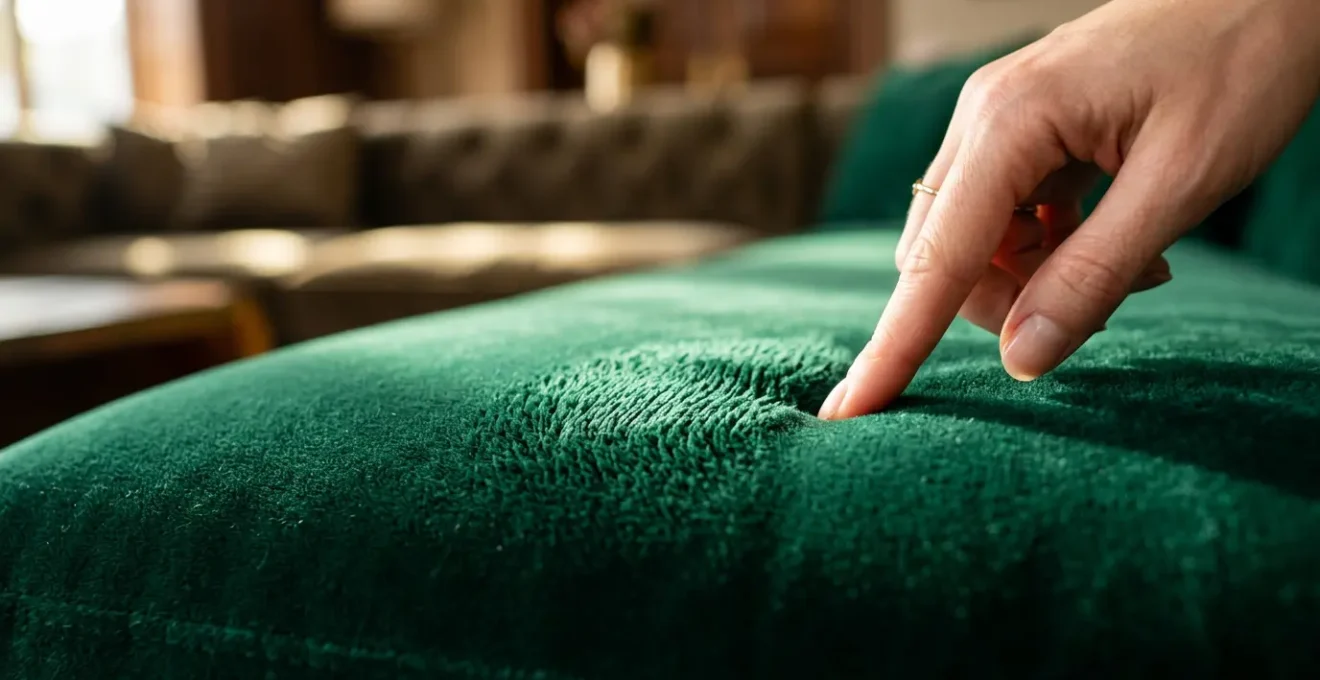
Contrary to popular belief, modern velvet is not a fragile luxury but one of the most resilient and practical upholstery choices for active households.
- Engineered performance velvets outperform fabrics like linen by a factor of 20 in abrasion tests.
- The dense, short pile resists pet claws and makes removing fur surprisingly simple.
- Its unique texture interacts with light to create depth, a feature to be embraced, not a flaw to be hidden.
Recommendation: Instead of fearing velvet, embrace its engineered resilience. Select a high-quality performance velvet for a perfect blend of opulent texture and real-world durability.
The very word “velvet” conjures images of opulent drawing rooms and delicate, hands-off luxury. For many, especially those with bustling homes filled with children and pets, this perception immediately places it in the “impractical” category. The common wisdom suggests it’s a fabric that will crush, stain, and wear at the mere suggestion of a muddy paw or a spilled drink. You’ve likely admired a plush velvet sofa, only to sigh and resign yourself to a more “sensible” but less inspiring choice.
But what if this long-held belief is fundamentally outdated? What if the key to a durable, family-friendly home isn’t avoiding texture, but choosing the right kind of engineered luxury? The conversation around upholstery often revolves around flat, utilitarian fabrics, overlooking the significant technological advancements in textiles. The velvet of today is not the fragile material of Victorian novels. It is a product of sophisticated engineering, designed to offer a rich, tactile experience without sacrificing real-world performance.
This guide dismantles the myths surrounding velvet’s fragility. We will move beyond the surface-level advice and delve into the science of its structure—the pile dynamics that give it both its signature sheen and its surprising toughness. We will explore why it’s not only beautiful but also intelligent, offering practical solutions for everything from pet hair to pressure marks. By understanding the “why” behind its performance, you can confidently select velvet not as a concession, but as a superior choice for a home that is both elegant and lived-in.
This article will guide you through the essential facts and expert techniques for living with velvet. From debunking durability myths with hard data to mastering simple maintenance tricks, you’ll discover how this luxurious fabric can be the most practical and rewarding choice for your home.
Summary: A Deep Dive into the Resilience of Velvet Upholstery
- Myth: is performance velvet actually more durable than linen?
- How to remove cat hair from velvet in 30 seconds without damaging the pile?
- Why your velvet sofa looks a different color from different angles?
- The “steaming” secret to fixing pressure marks on velvet chairs
- Velvet and Wood: why this material combination creates the perfect visual tension?
- How to select performance fabrics that resist juice spills and muddy paws?
- The “sticky leather” problem: which fabric stays cool during a nap?
- Decorative Cushions: The Low-Cost High-Impact Room Refresh
Myth: is performance velvet actually more durable than linen?
The most persistent myth about velvet is its perceived fragility, especially when compared to utilitarian fabrics like linen. However, this comparison is often misleading because it fails to account for the “performance” category of modern velvets. The reality, backed by industry-standard testing, is that high-quality performance velvet is not just durable; it is exponentially more durable than many traditional upholstery fabrics, including linen. The key metric for fabric durability is the Martindale rub test, which measures how many times a fabric can be abraded before showing signs of wear.
The results are staggering. While a standard residential-grade fabric might have a rating of 15,000 to 25,000 rubs, some performance velvets are built to commercial-grade standards. For instance, independent durability testing reveals that performance velvet scores often exceed 200,000 and can even reach over 500,000 Martindale rubs. In stark contrast, a high-quality Belgian linen, prized for its classic look, typically rates around 25,000 rubs. This means a performance velvet sofa is engineered to withstand at least 20 times the wear and tear of its linen counterpart.
This superior durability stems from velvet’s unique construction. Its tight, dense weave and short pile create a surface that is remarkably resistant to snagging and pilling. Linen’s looser, flat weave is more susceptible to catching on objects and developing fuzzy pills over time. The following table breaks down the key performance differences:
| Metric | Performance Velvet | Performance Linen |
|---|---|---|
| Martindale Rub Count | 200,000-500,000+ | 25,000-100,000 |
| Pilling Resistance | High (tight weave) | Medium (prone to pilling) |
| Stain Repellency | Excellent with treatment | Good with performance coating |
| Crush Recovery | Superior (pile springs back) | N/A (flat weave) |
| Pet Hair Resistance | Excellent | Poor (catches in weave) |
It’s also important to consider how these fabrics age. While linen develops a relaxed, “lived-in” patina with wrinkles and softening, performance velvet is engineered to maintain its original plush texture and color intensity for years. The choice is less about which is “better” and more about aesthetic preference: do you prefer a fabric that evolves and shows its history, or one that maintains its day-one appearance? For a consistently luxurious look, engineered resilience makes velvet the clear winner.
How to remove cat hair from velvet in 30 seconds without damaging the pile?
For pet owners, the battle against fur is constant. Many assume velvet, with its plush texture, would be a magnet for pet hair, trapping it deep within the fibers. The opposite is true. Unlike fabrics with a loose weave where hair can get embedded, velvet’s dense pile has no loops for hair to cling to. This makes removal surprisingly efficient, and one of the most effective tools is not a fancy gadget, but a simple household item: a rubber squeegee. This method is fast, safe, and won’t harm the delicate pile of your upholstery.
This technique leverages the natural grip of rubber to gather and roll up hair from the fabric’s surface. Below is a visual guide to this simple yet powerful method.
The process is incredibly straightforward. Using a clean, dry window squeegee, simply pull it gently across the fabric in a single direction. You will immediately see the rubber edge collect the pet hair into neat rolls that can be picked up by hand and discarded. It’s a 30-second solution that works far better than most vacuum attachments or lint rollers, which can sometimes push hair further into other types of fabric. As the experts at Masters of Covers note, the inherent qualities of velvet make it an ideal choice for pet-friendly homes.
Premium velvet is scratch-resistant and machine-washable. Plus, its smooth texture makes removing pet hair effortless.
– Masters of Covers, Premium Velvet Sofa Cover Guide
The key is to work on a dry surface and use gentle, consistent strokes. This ensures the pile dynamics are not disturbed, preserving the fabric’s lustrous finish while keeping it perfectly clean. This simple hack transforms velvet from a perceived liability into a pet owner’s secret weapon for a fur-free home.
Why your velvet sofa looks a different color from different angles?
One of velvet’s most enchanting and sometimes misunderstood characteristics is its ability to change color depending on the viewing angle and light source. You may have noticed your new emerald green armchair appearing almost silver in the morning light, and a deep, shadowy forest green in the evening. This is not a defect; it is the hallmark of true velvet and a key component of its luxurious appeal. This phenomenon, known as “shading” or “bruising,” is a direct result of the fabric’s three-dimensional structure.
Velvet is constructed with a short, dense pile, meaning millions of tiny fibers stand upright from the base fabric. When light hits these fibers, they react in different ways. Fibers oriented towards the light source will reflect it, creating a bright, silvery sheen. Fibers angled away from the light will absorb it, appearing darker and richer. As you move around the furniture, or as the light in the room changes throughout the day, your eye catches different combinations of this reflected and absorbed light. This constant light-play is what gives velvet its unique visual depth and vibrancy, a quality flat-woven fabrics can never replicate.
Interior designers often leverage this characteristic as a design tool. A strategically placed velvet piece can add dynamic energy to a room. In a space with bright, natural morning light, it will feel airy and shimmering. Under the warm glow of evening lamps, the same piece will feel cozy, opulent, and inviting. The key is understanding that this is not an inconsistency but a feature. You can’t prevent this natural characteristic, but you can minimize dramatic changes by positioning furniture away from direct, harsh light sources and by rotating cushions regularly. Ultimately, this shading is considered an enhancement, a sign of the fabric’s quality and complexity, not a flaw.
The “steaming” secret to fixing pressure marks on velvet chairs
Pressure marks are an inevitable part of living with velvet. A heavy book left on a cushion, the imprint from a shipping carton, or even the mark left after a long nap can leave the pile looking crushed and flattened. This can be alarming, making the fabric appear permanently damaged. However, the secret to restoring velvet’s plush, uniform appearance lies in a simple element: steam. The combination of gentle heat and moisture relaxes the compressed fibers, allowing them to spring back to their upright position.
Professional upholsterers use handheld steamers as their primary tool for this task. By holding a steamer several inches from the fabric’s surface and moving it gently, the pile is quickly revived. But you don’t need a dedicated appliance to achieve the same results. Several household methods can effectively fix pressure marks and restore the pile dynamics. According to textile experts at James Dunlop Textiles, the science is simple: heat and moisture work in tandem to relax and reset the fibers. In high-humidity climates, velvet may even “heal” itself over time.
For those without a steamer, here are a few effective alternatives:
- The Hot Shower Method: Hang the affected cushion or item in the bathroom while you take a hot shower. The ambient steam for 15-20 minutes is often enough to lift the pile.
- The Hairdryer Technique: Set a hairdryer to medium heat and hold it about 12-18 inches from the fabric. Gently brush the velvet with your hand or a soft brush in the direction of the pile as you apply heat.
- The Kettle Steam: For small marks, carefully hold the fabric about 12 inches above the spout of a boiling kettle. Be extremely cautious to avoid burns from the direct steam.
After any steam treatment, it’s best to gently brush the pile with a soft-bristled brush to help guide the fibers back into a uniform direction. This simple maintenance ensures that any temporary marks from daily life can be easily erased, keeping your velvet furniture looking pristine.
Velvet and Wood: why this material combination creates the perfect visual tension?
Pairing materials in interior design is an art of creating balance and interest. The combination of velvet and wood is a timeless classic for one primary reason: it creates a perfect visual tension. Velvet is soft, plush, and light-absorbing, conveying warmth and opulence. Wood, by contrast, can be hard, smooth, or grainy, with a natural character that feels grounded and organic. When placed together, they don’t just coexist; they enhance each other’s inherent qualities through contrast.
This tactile and visual dialogue is what makes the pairing so successful across various design styles. The deep, saturated color of a velvet cushion makes the grain of a walnut armchair frame appear richer and more detailed. The cool, smooth surface of a polished wood leg provides a striking counterpoint to the soft, yielding texture of the velvet upholstery. As the design team at Frontgate explains, the fabric’s texture is central to this effect.
Velvet’s three-dimensional texture makes colors appear richer and more vibrant. It creates both a visual and tactile experience that conveys approachable elegance.
– Frontgate Design Team, Which Upholstery Is Right for You Guide
This principle of contrast can be extended to a range of materials, each creating a different mood when paired with velvet. A brass or gold metal frame brings out velvet’s glamorous side, while blackened steel lends an industrial chic edge. The key is the interplay between the light-absorbing pile of the velvet and the reflective or matte surface of its partner material.
The table below explores how different material pairings with velvet can define a room’s aesthetic:
| Material Pairing | Design Style | Sensory Experience |
|---|---|---|
| Velvet + Walnut Wood | Mid-Century Modern | Warm contrast, smooth vs grain texture |
| Velvet + Polished Brass | Art Deco Glamour | Light-absorbing vs light-reflecting |
| Velvet + Blackened Steel | Industrial Chic | Soft plush vs hard cool metal |
| Velvet + Rattan/Wicker | Bohemian Luxe | Dense pile vs open weave |
| Velvet + Marble | Ultimate Opulence | Warm textile vs cool stone |
How to select performance fabrics that resist juice spills and muddy paws?
The term “performance fabric” has become a buzzword, but what does it actually mean? For a fabric to truly perform in a busy household, it needs to offer more than just a durable surface. It requires engineered resilience at the molecular level to actively resist stains and moisture. When selecting an upholstery fabric, it’s crucial to look beyond the label and understand the technology that provides this protection. Top-tier performance velvets are not simply coated with a temporary spray; they are constructed with inherent stain-fighting properties.
There are several leading technologies in this space. For example, some brands use an encapsulated fiber technology where each individual strand of yarn is wrapped in a protective layer. This prevents spills from ever penetrating the fiber itself, allowing liquids like red wine or coffee to bead up on the surface for easy blotting. Other technologies, like Crypton, integrate a permanent moisture barrier into the fabric’s backing, making it completely impermeable. Another popular system, Aquaclean, uses a specific molecular structure that allows most household stains to be removed with just water. Understanding these differences is key to choosing a fabric that matches your lifestyle needs.
But how can you be sure a fabric will live up to its promises? The single best way is to conduct your own “torture test” at home with large fabric swatches. Manufacturers are usually happy to send these, and putting them through a real-world trial is more revealing than any marketing claim.
Your Performance Fabric Audit: 5 Steps to the Perfect Choice
- Identify Contact Points: List every way your family will interact with the fabric. Consider kids’ sticky hands, pet claws, napping, and potential food spills.
- Gather Your ‘Weapons’: Collect samples of common household stain culprits like coffee, juice, ketchup, or a muddy cloth.
- Test Against Your Lifestyle: Apply your collected ‘weapons’ to large fabric swatches. Let them sit for a few minutes, then clean according to the manufacturer’s instructions. Note the effort required and any lingering marks.
- Assess Feel and Drape: Rub the fabric, sit on it, and see how it feels against your skin. Does the performance technology make it feel stiff or plastic-y? Is it comfortable enough for a nap?
- Plan for Integration: Compare your test results. Choose the fabric that provides the best balance of stain resistance, feel, and aesthetic for your specific family’s needs, not just the one with the highest technical specs.
This hands-on approach demystifies the selection process and empowers you to make a choice based on tangible evidence, ensuring your new furniture is truly ready for anything life throws at it.
The “sticky leather” problem: which fabric stays cool during a nap?
Anyone who has ever tried to nap on a leather or vinyl sofa on a warm day is familiar with the “sticky leather” problem. Non-porous materials trap heat and moisture against the skin, creating an uncomfortable, clammy sensation. The key to a comfortable lounging experience lies in a fabric’s breathability—its ability to allow air and water vapor to pass through. This is where the composition of a fabric, including velvet, becomes critically important. Not all velvets are created equal in this regard.
The breathability of velvet is determined by the fiber it’s made from. Velvets made from natural fibers like cotton or silk are significantly more breathable than their synthetic counterparts made from polyester. Polyester is essentially a form of plastic; its fibers do not absorb moisture and they trap heat. Cotton, on the other hand, is a natural fiber that can absorb moisture and allow for much better air circulation. In fact, specific fabric breathability tests show that natural fiber velvets, such as 100% cotton velvet, permit significantly more moisture vapor to pass through than a 100% polyester velvet. This quality makes cotton velvet a far superior choice for comfort, especially in warmer climates or for family members who tend to run hot.
This difference in tactile intelligence places fabrics on a spectrum of breathability, directly impacting their comfort level for everyday activities like napping. The following table illustrates where different common upholstery materials fall on this spectrum:
| Fabric Type | Breathability Rating | Summer Comfort | Moisture Management |
|---|---|---|---|
| Linen | Most Breathable | Excellent | Superior wicking |
| Cotton | Highly Breathable | Very Good | Good absorption |
| Cotton Velvet | Moderately Breathable | Good | Allows vapor transfer |
| Polyester Velvet | Low Breathability | Fair | Traps moisture |
| Bonded Leather | Non-Breathable | Poor | No vapor transfer |
| Vinyl | Least Breathable | Very Poor | Completely sealed |
When prioritizing comfort and avoiding that “sticky” feeling, always check the fiber content of your velvet. Opting for a cotton velvet or a blend with a high percentage of natural fibers will ensure your luxurious sofa is as comfortable for an afternoon nap as it is beautiful to look at.
Key takeaways
- Modern performance velvet is engineered to be far more durable than traditional fabrics like linen, often with 20x the abrasion resistance.
- Velvet’s dense, loop-free pile makes it naturally resistant to pet snags and allows for effortless hair removal with simple tools like a squeegee.
- The color-shifting “shading” of velvet is a sign of quality caused by its 3D pile, not a defect, and can be managed with simple steam treatments.
Decorative Cushions: The Low-Cost High-Impact Room Refresh
One of the most effective and budget-friendly ways to transform the look and feel of a room is through the strategic use of decorative cushions. They are the design equivalent of jewelry for your furniture, providing an opportunity to introduce color, pattern, and, most importantly, texture. In this role, velvet cushions are unparalleled. Their rich, saturated color and plush texture can instantly elevate a space, making it feel more opulent, curated, and inviting.
Using velvet cushions allows you to tap into the luxurious feel of the fabric without committing to a large, expensive piece of furniture. An interior design expert on The Stated Home’s blog memorably frames this concept:
Frame velvet cushions as the ‘jewelry’ of a room. Using them in deep, saturated jewel tones creates high-impact focal points that make the entire space feel more opulent and curated.
– Interior Design Expert, The Stated Home Blog
A particularly sophisticated approach is to use tone-on-tone textural layering. This involves choosing a single color family and layering different types of velvet to create subtle visual interest and depth. Instead of a flat, one-dimensional look, you create a rich tapestry of textures that catch the light in different ways. This technique works beautifully for creating a serene yet luxurious atmosphere.
Here is a simple guide to mastering this technique:
- Choose a Color Family: Start with a single hue, for example, a range of blues from navy to teal.
- Layer Velvet Textures: Combine different velvet finishes. Use a matte velvet for a large base cushion, add a crushed velvet accent pillow for visual movement and sheen, and perhaps a slub velvet throw for a more organic, linear texture.
- Maintain a Tight Palette: Keep all pieces within two to three shades of the same core color to ensure the look is cohesive and elegant, not chaotic.
- Arrange for Light: Position the different textures to catch the light at varying angles, maximizing the subtle light-play and showcasing the depth of each fabric.
This thoughtful use of velvet cushions is a powerful tool. It’s a low-cost, high-impact strategy that allows you to experiment with luxury and refresh your living space with minimal commitment, proving that even small touches of velvet can make a significant design statement.