
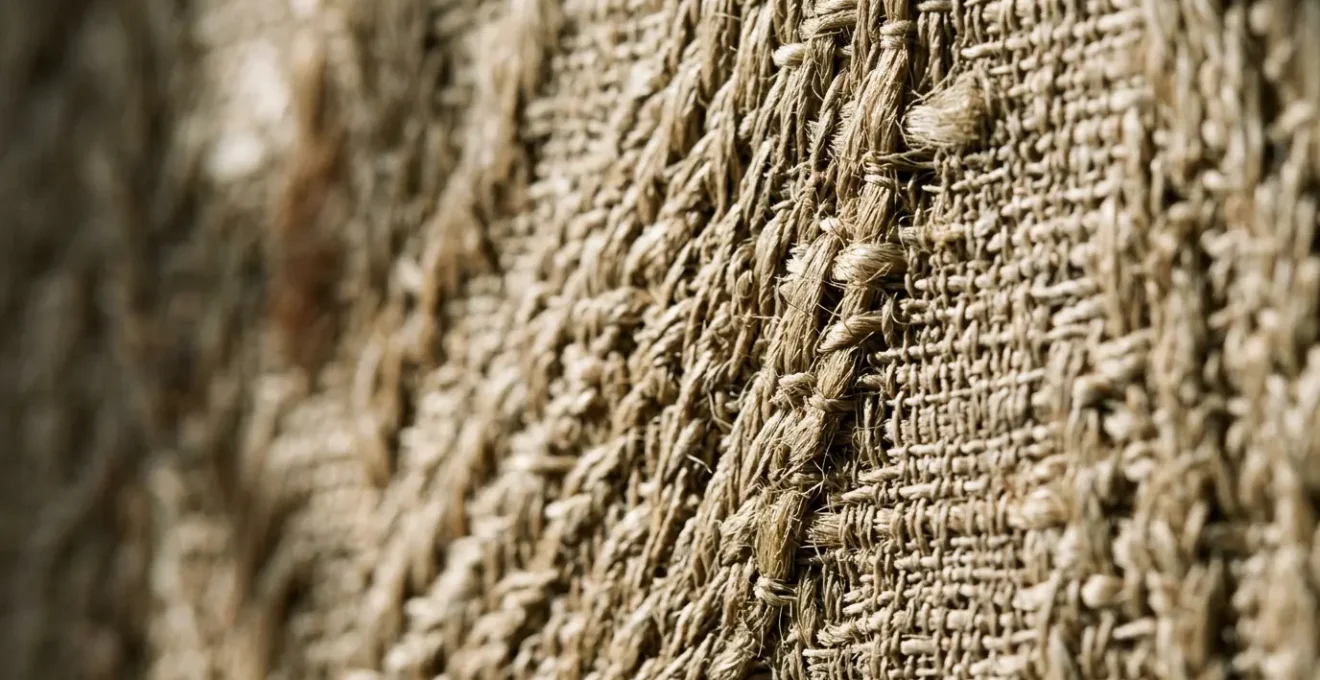
Contrary to the common belief that wallpaper merely covers flaws, it’s a strategic design tool that actively corrects them through optical and physical principles.
- Textured surfaces manipulate light by scattering it in multiple directions, making the linear shadows cast by cracks and imperfections invisible to the eye.
- Durable materials like heavy vinyl physically bridge gaps and distribute wall stress, preventing existing cracks from telegraphing through to the surface over time.
Recommendation: Stop thinking of texture as just a pattern. Start treating it as a functional finish to solve architectural problems and build dimensional character in your home.
For homeowners battling uneven plaster, hairline cracks, or the sheer monotony of flat, box-like rooms, the go-to solution has long been another coat of paint. Yet, this approach often proves to be a temporary fix, with imperfections stubbornly reappearing as the house settles or light shifts. The frustration is real: you’re left with a wall that feels flawed, no matter how many layers you apply. While many turn to wallpaper as a decorative upgrade, its true power, especially when textured, is fundamentally misunderstood. It isn’t just a prettier bandage; it’s a corrective architectural finish.
The conversation around wall coverings often revolves around color and pattern, overlooking the most transformative element: dimension. The true potential of textured wallpaper lies in its ability to manipulate both light and space. Unlike paint, which can accentuate every minor divot and seam, a textured surface introduces a new physical and visual layer to the room. This article moves beyond the superficial advice of just “covering up” imperfections. We will deconstruct the science of how textured wallpaper works as an optical tool, a structural reinforcement, and even an acoustic moderator.
We’ll explore why its ability to hide cracks is scientifically superior to paint, how it can alter a room’s acoustics, and the practical considerations—from pattern matching to strategic placement—that separate an amateur application from a professional transformation. By understanding wallpaper as a dimensional material, you can finally solve the persistent problem of imperfect walls and build layers of character that paint alone can never achieve. This guide provides the expert insights needed to leverage texture as a powerful, problem-solving element in your interior design toolkit.
This comprehensive guide explores the multifaceted role of textured wallpaper, from its technical advantages to its strategic application in interior design. Discover how to select and use this versatile material to not only beautify your space but also to solve common structural and aesthetic challenges.
Summary: A Dimensional Guide to Textured Wallpaper
- Why textured wallpaper hides cracks better than 5 layers of paint?
- How much can heavy vinyl wallpaper reduce echo in a hollow room?
- Drop match vs. Straight match: which pattern type wastes less paper?
- The “peel and stick” trap: does it really come off without ruining the drywall?
- Where to stop the wallpaper: one wall vs. four walls in a small room?
- Shiplap vs. plaster: which wall finish offers better long-term value?
- How to restore plaster cornices that have been painted over 10 times?
- Wall Decor: Curating a Personal Gallery That Tells Your Story
Why textured wallpaper hides cracks better than 5 layers of paint?
The belief that paint can solve wall imperfections is a fundamental misunderstanding of optics and material science. Paint is a liquid coating that conforms to the surface, meaning it perfectly highlights every crack, bump, and flaw. A textured wallpaper, however, operates on entirely different principles, making it a structurally superior solution for flawed walls. It doesn’t just cover a crack; it optically erases it and physically restrains it.
The primary mechanism at play is light scattering. A smooth, painted wall reflects light uniformly, so any hairline crack creates a distinct, linear shadow that the eye immediately detects. A textured surface, with its countless raised and recessed points, scatters light in thousands of different directions. This diffuses the light, eliminating the harsh shadows that make imperfections visible. Furthermore, the inherent pattern or texture introduces intentional visual noise, effectively camouflaging any random, underlying defect by making it part of a larger, deliberate design.
Beyond optics, there’s a physical advantage. Quality textured wallpaper, particularly vinyl or other flexible materials, physically bridges small gaps and distributes stress across the surface. When a house settles and a crack tries to widen, the wallpaper’s tensile strength helps to hold the plaster together, preventing the crack from “telegraphing” through to the new surface. This combination of optical illusion and physical reinforcement is why a single layer of well-chosen wallpaper is infinitely more effective than multiple coats of paint. It’s a long-term solution, with some products offering 15-25 years of durability for quality textured wallpaper, compared to the frequent touch-ups required for painted surfaces.
How much can heavy vinyl wallpaper reduce echo in a hollow room?
While textured wallpaper is primarily chosen for its visual benefits, its impact on a room’s acoustics is a significant, often-overlooked advantage. In rooms with hard surfaces like hardwood floors, large windows, and sparse furniture, sound waves bounce freely, creating an unpleasant echo or reverberation. While any wall covering offers more sound absorption than bare paint, the material and texture of the wallpaper play a crucial role in its acoustic performance.
Heavy vinyl wallpaper provides a moderate level of sound absorption. Its density and slight pliability help to dampen sound waves, reducing the “hollowness” of a room. However, for superior acoustic improvement, natural fiber wallpapers are unmatched. Materials like grasscloth, sisal, hessian, seagrass, and fabric wallpapers have a porous, non-uniform structure that is highly effective at trapping and absorbing sound waves. As a case study in material science shows, the natural, open structure of sisal or bamboo fibers works like an acoustic panel, preventing sound from reflecting back into the room. This makes them an ideal choice for home offices, media rooms, or bedrooms where sound control is a priority.
The trade-off, of course, is often cost and durability. While natural fibers offer premium acoustic performance, heavy vinyl is more budget-friendly and better suited for high-traffic areas. The choice depends on the room’s primary function. For a living room where conversations are frequent, a soft, fabric-backed wallpaper might be a worthwhile investment for both its tactile feel and its sound-dampening qualities.
This comparative analysis highlights the different acoustic properties of common wall coverings. As shown in a recent analysis of wall material properties, the right choice depends on balancing acoustic needs, durability, and budget.
| Material Type | Sound Absorption | Best For | Relative Cost |
|---|---|---|---|
| Grasscloth | High (porous fibers) | Home offices, media rooms | Premium |
| Heavy Vinyl | Moderate | High-traffic areas | Budget-friendly |
| Embossed Wallpaper | Low-Moderate | Visual texture priority | Mid-range |
| Fabric Wallpaper | High (soft surface) | Bedrooms, living rooms | Premium |
Drop match vs. Straight match: which pattern type wastes less paper?
Understanding pattern matching is not an esoteric detail for professional installers; it is a critical factor that directly impacts your budget and project timeline. The type of pattern match determines how much wallpaper you will need to purchase—and how much you will inevitably waste. The two primary types are straight match and drop match, with a third, random match, being the most forgiving.
A straight match pattern is the simplest: the design aligns horizontally across adjacent strips. This means the top of each new strip will start with the same part of the pattern, leading to minimal waste. It is the most economical choice for patterned paper. A drop match, on the other hand, is more complex. The pattern is staggered, meaning the design on one strip will align with a point halfway (or another fraction) down the pattern on the previous strip. This creates a more dynamic, diagonal flow but requires you to cut off significant portions of the roll to find the correct alignment, leading to higher waste—sometimes up to 20% more than a straight match.
The most efficient option of all is a random match. These are typically textures like grasscloth, linen effects, or simple stripes where there is no specific design to align. You can hang strips next to each other with virtually zero waste, making it the ideal choice for beginners or those on a tight budget. Before purchasing, always check the product details for the “pattern repeat” and “match type.” A larger pattern repeat on a drop match wallpaper will result in the most waste.
Professionals minimize waste through careful planning. They cut panels in sequence from the same roll, plan around obstacles like doors before making the first cut, and use off-cuts for smaller, less visible areas. This strategic approach turns a potentially wasteful process into an efficient one.
The “peel and stick” trap: does it really come off without ruining the drywall?
The rise of peel-and-stick wallpaper has been fueled by a promise of commitment-free decorating. However, the idea that it can be applied and removed without a trace is a dangerous oversimplification. The reality is that its success—or failure—depends almost entirely on the quality of the wallpaper adhesive, the condition of your wall surface, and the removal technique. Low-quality adhesives can either fail to stick properly or, conversely, cure over time and bond so strongly that they tear the paper face off the drywall upon removal.
The “trap” of peel-and-stick lies in its perceived ease. Homeowners often skip crucial preparation steps, applying it directly to a painted wall. Without the right preparation, the wallpaper’s adhesive can pull paint and even the underlying drywall paper with it, leading to costly repairs. As the Tempaper Design Team notes, wallpaper quality is a critical factor, stating, “Quality of the wallpaper is essential. Thicker wallpaper will conceal imperfections much better than thinner paper.” This logic extends to the backing and adhesive; a quality product is designed with a stable, low-tack adhesive meant for removal.
Quality of the wallpaper is essential. Thicker wallpaper will conceal imperfections much better than thinner paper.
– Tempaper Design Team, Tempaper Blog on Textured Walls
To avoid this trap, a professional approach is non-negotiable, even for a “temporary” product. This involves testing a sample in an inconspicuous area and, most importantly, applying a shield-type primer before installation. This primer creates a sacrificial barrier layer between the wall and the adhesive, ensuring that if any damage occurs during removal, it’s the primer that peels, not your drywall.
Action Plan: Professional Removal Techniques for Peel & Stick
- Adhesion Test: Always apply a small sample to the wall and leave it for 48 hours to check for both adhesion strength and clean removability.
- Barrier Primer: Apply a layer of a “shield” or “sizing” primer specifically designed for wallcoverings to create a protective, sacrificial layer.
- Adhesive Choice: Opt for wallpapers that specify a water-based, low-tack, or removable adhesive. Avoid products with no technical specifications.
- Gentle Heat Application: During removal, use a hairdryer or a heat gun on a low setting to gently warm the panel, which softens the adhesive and allows for a cleaner release.
- Strategic Angle Pull: Peel the wallpaper back on itself slowly at a 45-degree angle. Pulling straight out increases the risk of delaminating the drywall.
Where to stop the wallpaper: one wall vs. four walls in a small room?
The decision of whether to wallpaper a single accent wall or all four walls is a crucial strategic choice that can dramatically alter the perception of a room’s size and character. In a small room, the common fear is that covering all four walls will feel overwhelming and claustrophobic. While this can be true for large, dark, or busy patterns, a subtle, light-colored texture can actually do the opposite, blurring the corners and making the space feel more cohesive and expansive.
However, the more impactful and often safer choice for a small room is the accent wall. This technique involves applying wallpaper to a single, strategic wall to create a strong focal point. Typically, this is the wall behind a bed’s headboard, a sofa, or a fireplace. This approach achieves several goals simultaneously: it injects personality and depth without the commitment of a full-room application, it draws the eye to a specific zone, and it creates an optical illusion of depth. The room feels longer because the accent wall appears to recede.
A successful case study highlighted by The Handyman’s Daughter demonstrates this principle perfectly: a homeowner installed textured wallpaper on the wall behind an upholstered headboard in a small bedroom. The dimensional paper instantly created a sophisticated focal point and added a sense of depth without visually shrinking the space. The key is choosing the *right* wall. An accent wall should highlight the room’s primary feature, not a wall cluttered with doors or awkward angles. By using texture on one wall, you create a powerful statement that has more impact than covering all four walls with a less confident pattern.
Shiplap vs. plaster: which wall finish offers better long-term value?
When considering wall finishes beyond paint, homeowners often gravitate toward trendy options like shiplap or traditional, high-end choices like plaster. Each has its aesthetic merits, but when evaluated for long-term value—factoring in installation cost, versatility, and reversibility—textured wallpaper emerges as a surprisingly powerful contender. It offers a sophisticated middle ground that balances cost, DIY-friendliness, and design flexibility.
Shiplap, while popular for its rustic or coastal charm, is a relatively permanent decision. It involves a high material and labor cost, is moderately difficult for a DIYer to install perfectly, and its removal can cause significant wall damage. Plaster, the gold standard for luxury finishes, offers beautiful organic texture and excellent acoustic properties but comes with a very high price tag and requires highly skilled professional installation. Both are low-reversibility options, locking you into a specific style.
Textured wallpaper, by contrast, provides a “best of both worlds” scenario. High-quality embossed papers like Anaglypta can mimic the look of plaster or even carved wood at a fraction of the cost. They are highly DIY-friendly, and modern pasting techniques make them reasonably easy to remove or paint over when you’re ready for a change. This high reversibility is a major component of its long-term value; you are not married to one look. It also offers moderate to high acoustic value, depending on the material, rivaling that of plaster.
The following table, based on an analysis from wallcovering experts Graham & Brown, compares these finishes across key value metrics.
| Wall Finish | Installation Cost | DIY Friendly | Reversibility | Acoustic Value |
|---|---|---|---|---|
| Shiplap | High | Moderate | Low (permanent) | Low |
| Plaster | Very High | Low (professional) | Low (permanent) | Moderate |
| Textured Wallpaper | Low-Moderate | High | High (removable) | Moderate-High |
| Paintable Anaglypta | Low | High | Moderate | Low-Moderate |
How to restore plaster cornices that have been painted over 10 times?
Historic homes with original plaster cornices or moldings present a unique challenge. Over decades, countless layers of paint can obscure intricate details, turning a beautiful architectural feature into a lumpy, indistinct band. While stripping paint from delicate plaster is a painstaking and often damaging process, textured wallpaper offers a creative and restorative alternative that can either complement the restored plasterwork or cleverly substitute for irreparable sections.
For cornices that are too damaged or costly to fully restore, embossed wallpapers like Anaglypta or Lincrusta provide a historically appropriate solution. Founded in the late 1800s, these deeply textured papers were designed to mimic ornate plasterwork and have been used in historic revival projects for over a century. A band of embossed wallpaper can be installed below the damaged cornice and painted the same color as the ceiling and trim, creating the illusion of a larger, more detailed molding. This technique seamlessly blends the old with the new.
When the cornices *can* be restored, the focus shifts to using wallpaper to highlight them. By installing a subtly textured wallpaper (like a linen or silk effect) on the wall below the cornice, you create a sophisticated contrast that makes the restored plasterwork the star of the show. Using a clean break at the cornice line, achieved by applying lining paper first, ensures a crisp transition. You can even paint the textured wallpaper in a deep, dramatic color like charcoal or teal to make the white plaster details pop with architectural clarity. For areas where a portion of the cornice is missing, embossed wallpaper borders can be used to patch the design, offering a practical and visually cohesive repair.
Key Takeaways
- True Power of Texture: Textured wallpaper works by scattering light and distributing physical stress, making it an optical and structural tool, not just a decorative covering.
- Acoustic Benefits are Real: Beyond visual appeal, materials like grasscloth, fabric, and other natural fibers offer significant sound absorption, improving a room’s acoustics.
- Pattern Match Dictates Waste: Your choice between a straight, drop, or random match pattern has a direct and significant impact on your project’s budget and material waste.
Wall Decor: Curating a Personal Gallery That Tells Your Story
The final layer of personalization in a room is the art and objects that tell your story. However, hanging a gallery wall on a flat, painted surface can sometimes feel one-dimensional. Using a textured wallpaper as the backdrop completely transforms this experience, turning a simple wall display into a dynamic, multi-layered installation. The texture behind the frames adds a level of sophistication and depth that a plain wall cannot replicate.
Instead of competing with the artwork, a subtle texture—like a woven grasscloth, a raw silk effect, or a minimalist plaster-like finish—acts as a rich, tactile canvas. It adds warmth and character, making the entire wall a cohesive piece of art. The interplay of light on the background texture creates subtle shadows and highlights that change throughout the day, bringing the entire gallery wall to life. This effect is particularly powerful with floating frames or art with a strong three-dimensional quality.
A more daring approach involves using wall murals or decals directly on a textured surface. As a creative case study shows, applying a vibrant mural like the Laguna design to a textured wall creates a unique three-dimensional effect. The background texture interacts with the printed design, adding an unexpected layer of depth and sophistication. The key is to choose a wallpaper texture that complements, rather than fights with, the art. A neutral, organic texture provides a foundation that elevates the entire collection, ensuring your personal gallery is not just on the wall, but an integral part of its architecture.
By moving past paint and embracing textured wallpaper as a strategic tool, you gain the power to not only mask imperfections but to fundamentally reshape your space. Armed with an understanding of its optical, physical, and acoustic properties, you can now select a finish that solves problems and builds a rich, dimensional character that tells a unique story. The next step is to begin identifying the walls in your own home that could benefit from this transformative approach.