
A home is far more than four walls and a roof. It is a collection of carefully orchestrated spaces, each with its own rhythm, purpose, and potential. From the entryway that greets you after a long day to the bathroom where you prepare for morning challenges, every room plays a silent but vital role in your daily wellbeing. Understanding how to design these spaces thoughtfully transforms a house into a sanctuary that actually supports your life.
Think of your home as a symphony orchestra. The entryway sets the opening tone, the kitchen provides energetic crescendos during meal preparation, living rooms offer harmonious gathering moments, and bedrooms deliver the quiet resolution of restful sleep. When one section falls out of tune—a cluttered entryway, a bedroom invaded by noise—the entire composition suffers. The goal is not perfection but intentional design that makes each room work harder while feeling effortlessly comfortable.
This resource explores the major rooms found in most homes, examining their unique challenges and practical solutions. Whether you are building from scratch, renovating, or simply looking to improve what you already have, these foundational principles will help you approach each space with clarity and confidence.
The entryway is the first and last room you experience each day, yet it often receives minimal design attention. Research on household habits suggests that most entryways become cluttered drop zones within a week of being tidied. This happens because the space lacks a clear system for managing the daily flow of keys, mail, shoes, and outerwear.
The concept of a landing strip solves the daily avalanche problem. This designated area—typically a small console table or wall-mounted organizer—provides a specific home for items that travel in and out daily. The key is making the system so obvious and accessible that using it requires less effort than dropping items randomly.
Choosing between a storage bench and a console table depends primarily on your hallway width and household needs. Benches offer seating for putting on shoes plus hidden storage below, making them ideal for families with children. Console tables work better in extremely narrow corridors where every centimeter counts, though they sacrifice storage volume for visual lightness.
One commonly overlooked entryway decision is flooring material. Many homeowners select beautiful options that cannot withstand winter boots, muddy paws, or summer sand. Durable materials like ceramic tile, luxury vinyl, or treated stone prevent aesthetic deterioration while remaining easy to clean. Additionally, rotating your entryway storage seasonally—swapping winter coat hooks for summer hat storage—keeps the space functional year-round.
The family living room faces a unique challenge: it must accommodate everything from toddler play sessions to adult relaxation, often within the same afternoon. Many homeowners believe stylish furniture and family life are mutually exclusive, waiting years for children to grow before investing in quality pieces. This assumption is outdated.
Modern performance fabrics have revolutionized family-friendly design. Materials like solution-dyed acrylics and specially treated microfibers resist juice spills, muddy paw prints, and even marker stains. When comparing leather versus microfiber for pet owners, each has distinct advantages: leather cleans easily but shows scratches, while quality microfiber resists claw damage but may absorb odors over time.
Sharp-edged coffee tables represent one of the most common overlooked dangers in homes with young children. Rather than eliminating attractive furniture entirely, consider:
Integrating hidden toy storage allows a living room to transform from daytime play zone to adult-only retreat after bedtime. Built-in cabinetry, storage ottomans, and decorative baskets keep toys accessible for children while enabling quick evening tidying that restores the room’s sophisticated atmosphere.
Modern kitchen aesthetics often prioritize clean lines and minimalist appearances, leading some homeowners to worry that style demands sacrificing functionality. In reality, the most successful modern kitchens achieve their streamlined look precisely because everything has a designated, accessible place.
Integrated appliance panels allow refrigerators, dishwashers, and even microwaves to disappear behind cabinetry that matches the rest of your kitchen. This technique creates visual continuity while keeping every tool within easy reach. The key is planning appliance placement during the design phase rather than attempting retrofits.
The handleless versus traditional hardware debate often centers on aesthetics, but maintenance matters equally. Handleless push-to-open mechanisms create unbroken surfaces but show fingerprints in high-traffic areas. Traditional pulls and knobs provide tactile guidance while cooking with messy hands but require regular cleaning around the hardware itself.
One critical design error involves sacrificing comfortable working heights for trendy appearances. Standard counter heights suit average body proportions, but serious home cooks benefit from customized heights at prep stations. Similarly, planning electrical outlet placement in a logical sequence—following your typical cooking workflow—prevents awkward cord stretching and countertop clutter.
Modern construction techniques, particularly open floor plans, often compromise bedroom privacy. Sound travels more easily in contemporary builds due to thinner interior walls, fewer solid doors, and continuous flooring that conducts vibration. Understanding these challenges helps you implement targeted solutions.
Replacing hollow-core doors with solid-core alternatives significantly reduces sound transmission between rooms. For those unable to replace doors entirely, weatherstripping seals, door sweeps, and even heavy curtains positioned near doorways can meaningfully improve acoustic privacy without renovation.
If your bedroom door opens directly onto the living room, sound isolation becomes nearly impossible. Architectural buffer zones—hallways, closets, or secondary spaces positioned between social and sleeping areas—create psychological and acoustic separation. Even a short corridor functions as a transitional decompression zone before entering the master suite.
The master bedroom serves one primary function: enabling quality sleep that restores your body and mind. Design decisions should filter through this single priority, from furniture placement to material selection.
Positioning your bed with a clear view of the doorway—without being directly in line with it—reduces subconscious anxiety. This principle, recognized across multiple design traditions, allows your resting brain to monitor the room’s entry point without feeling exposed. Placing the headboard against a solid wall enhances this sense of security.
Visual clutter stimulates the brain and elevates stress hormones even when you are not consciously noticing it. Closed storage, minimal decorative objects, and neutral color palettes create calming environments. Additionally, electronic devices charging near the bed emit blue light wavelengths that suppress melatonin production, making dedicated charging stations outside the bedroom a worthwhile consideration.
When partners maintain different wake-up times, bedroom layout can minimize disturbance. Positioning the primary sleeper’s side away from the bathroom path, using blackout curtains in sections, and selecting floor materials that absorb footstep sounds all contribute to peaceful coexistence despite different schedules.
Transforming an ordinary bathroom into a wellness-focused retreat requires less renovation than most people assume. Small adjustments to organization, lighting, and fixtures create significant atmospheric improvements.
Removing branded bottles and colorful packaging represents the single most impactful step toward spa ambiance. Decanting products into uniform containers or storing them inside cabinets immediately elevates visual tranquility. This simple change costs almost nothing while dramatically altering the room’s feel.
Rain showerheads provide gentle, full-body water coverage that mimics natural rainfall, while handheld fixtures offer targeted massage benefits. Many homeowners install both, switching between experiences based on whether they seek relaxation or invigoration. Integrating aromatherapy through eucalyptus bundles hung from the showerhead or dedicated steam diffusers adds another sensory layer.
Bathrooms require multiple lighting modes: bright, even illumination for grooming tasks and dimmer, warmer options for evening baths. Installing separate circuits or dimmable fixtures allows easy transitions. Meanwhile, heated flooring eliminates the jarring cold-tile shock that can undo the relaxation of a warm shower, maintaining comfort from the moment you step out.
Not every meaningful space requires an entire room. Reading nooks transform underutilized corners into valuable retreats that support emotional regulation and personal recharging. Studies on dedicated quiet zones suggest they improve stress management by providing reliable escape spaces within busy households.
Whether you choose a window seat or an armchair corner depends on your reading habits. Window seats offer natural light and views but may cause glare during certain hours. Armchair corners provide consistent, controllable environments but sacrifice daylight benefits. In either case, task lighting positioned to prevent eye strain—ideally from behind and above your shoulder—makes extended reading sessions comfortable.
The most common reading nook failure involves insufficient surface space for beverages or reading glasses. Even a small side table or built-in shelf solves this problem. Additionally, integrating hidden book storage under a window seat or within nearby cabinetry keeps favorite titles accessible without cluttering the primary living areas.
Each room in your home presents unique challenges and opportunities. The entryway demands systems that manage daily chaos, kitchens require balancing beauty with hard-working functionality, and bedrooms need protection from the rest of the household’s activity. By approaching each space with clear priorities and practical solutions, you create a home where every room genuinely supports the life you want to live. The detailed articles within this section explore each of these topics further, offering specific techniques and comparisons to help you make informed decisions for your unique situation.
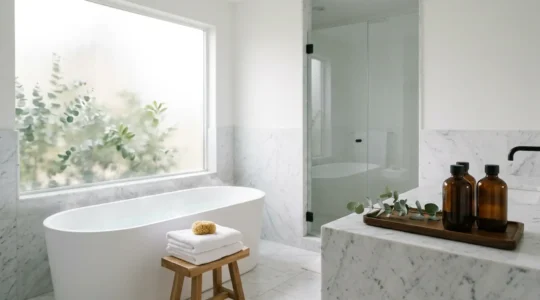
The secret to a true spa bathroom isn’t adding luxury items; it’s meticulously engineering your environment to shift your mind from a state of hurried routine to restorative ritual. Eliminating “visual noise” from branded products is the most impactful first…
Read more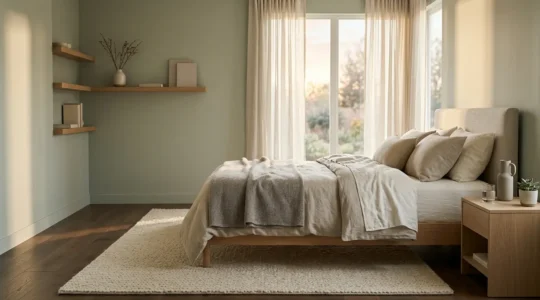
Transforming your master suite into a sleep sanctuary is not about decoration; it’s about neuro-architecture—designing a space that actively calms your nervous system and supports deep, restorative sleep. The layout, light, and level of “visual noise” in your bedroom directly…
Read more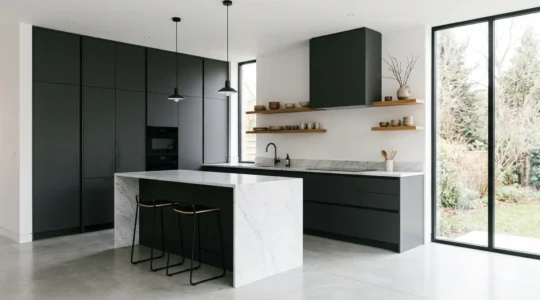
The ultimate modern chef’s kitchen achieves ‘Seamless Functionality’, where high-performance tools and ergonomic workflows are invisibly integrated into a flawless aesthetic. Minimalism is achieved not by sacrificing tools, but by intelligently concealing them behind advanced cabinetry and paneling. Ergonomic intelligence—designing…
Read more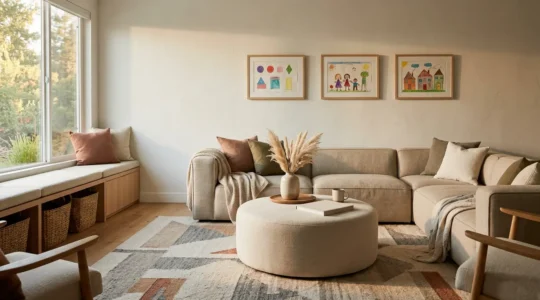
The common belief that you must sacrifice a beautiful home until the kids move out is a myth. True durability comes from strategic, “offensive design” choices, not just defensive slipcovers. Investing in “lifecycle furniture” and understanding “material intelligence” allows your…
Read more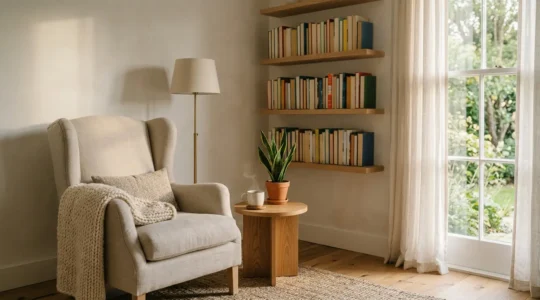
A shared home can feel chaotic, leaving no room for a quiet retreat. This guide reveals how to transform forgotten corners into true sanctuaries, not just with furniture, but through ‘psychological architecture’—using light, texture, and layout to actively support focus…
Read more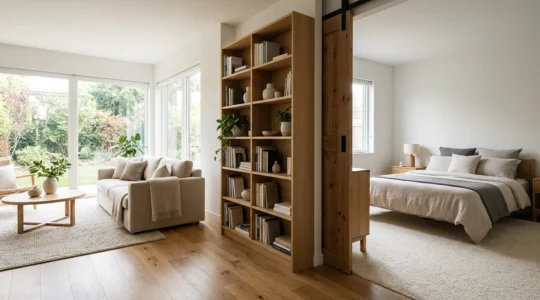
True bedroom privacy in an open-plan home is not achieved with decorative screens, but through architectural interventions that control sound and sight lines. The primary failure point for acoustic privacy is the combination of direct pathways for sound and lightweight…
Read more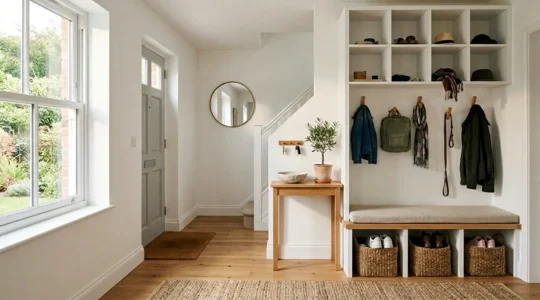
The key to a permanently organized entryway isn’t more storage—it’s designing a system that makes tidying up easier than making a mess. Analyze and reduce “clutter friction” by making daily-use items effortless to put away. Go vertical with storage to…
Read more