
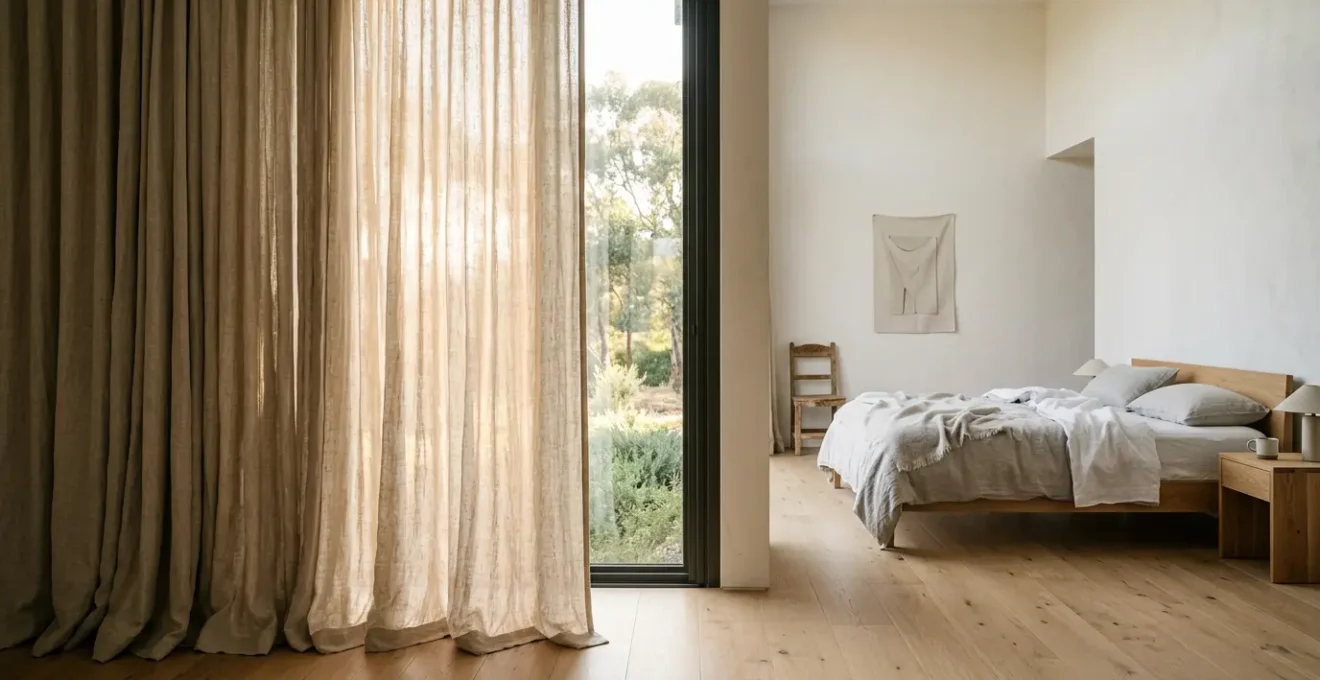
The secret to perfect linen curtains is to embrace their ‘flaws’—wrinkles, shrinkage, and sheerness—as intentional features of a sophisticated, lived-in aesthetic.
- Linen’s unique fiber structure creates a soft, flattering glow that synthetics can’t replicate.
- Strategic layering and understanding fabric weight are key to managing privacy without sacrificing light.
Recommendation: Pre-wash your curtains in cold water before hemming to control shrinkage, and choose rings for a hanging method that enhances their natural, elegant drape.
The allure of linen curtains is undeniable. They evoke images of sun-drenched coastal homes and breezy, minimalist interiors, promising a touch of natural elegance. Yet, for many homeowners, the dream is quickly clouded by practical worries. Will they be too sheer? Will I be constantly fighting a losing battle with wrinkles? And what about the dreaded shrinkage? It’s easy to feel that achieving this “effortless” look is, in fact, a lot of effort.
Most advice falls into two camps: either treating linen like any other fabric that must be tamed with an iron and precise measurements, or simply accepting a rumpled, messy fate. But what if the true key lies somewhere else entirely? What if the characteristics you perceive as flaws are actually the very essence of linen’s charm? The wrinkles aren’t a problem; they’re texture. The sheerness isn’t a vulnerability; it’s an opportunity to sculpt light.
This guide reframes the conversation. We’re moving beyond the basic pros and cons to explore the philosophy of “relaxed luxury.” We will delve into how to master linen’s inherent properties—not fight against them—to create a space that feels both beautifully curated and authentically welcoming. We’ll examine the science behind its signature glow, compare pure linen to its blended counterparts, and offer concrete strategies for managing privacy and fit, ensuring you can confidently bring this timeless textile into your home.
To help you navigate every aspect of choosing and styling these beautiful textiles, this article covers everything from the aesthetic philosophy to the practical details of installation and care.
Summary: The Complete Guide to Linen Curtains
- To Iron or Not to Iron: Understanding the “Relaxed Luxury” Aesthetic of Linen
- Why Linen Creates a More Flattering Room Glow Than Polyester
- The “Puddling” Allowance: How Much Extra Length to Buy Knowing Linen Shrinks
- 100% Linen vs. Linen-Blend: Is the Pure Fiber Worth Double the Price?
- Rings vs. Rod Pocket: Which Hanging Method Allows Linen to Fold Naturally?
- Sheer Curtains vs. Blinds: Which Maximizes Light While Keeping Privacy?
- Curtains vs. Liners: Should You Buy 2-in-1 or Add a Liner to Existing Drapes?
- Home Textiles: Refreshing Your Home’s Climate and Look Seasonally
To Iron or Not to Iron: Understanding the “Relaxed Luxury” Aesthetic of Linen
The first question on every new linen owner’s mind revolves around wrinkles. For decades, we’ve been taught that wrinkles are a sign of sloppiness. But in the world of high-end interior design, linen’s natural texture is celebrated as “relaxed luxury.” This aesthetic is about creating a space that feels authentic, comfortable, and sophisticated without being sterile or stiff. The gentle, organic creases in a linen curtain tell a story of a home that is lived-in and loved, not a showroom.
Embracing this look is a conscious design choice. Luxury hotels and designer homes increasingly opt for unironed linen curtains in bedrooms and living spaces to cultivate an inviting, organic atmosphere. They save the crisp, pressed look for more formal areas like dining rooms. The key is intentionality. An “artfully rumpled” curtain looks deliberate and chic, while a haphazardly wrinkled one can look messy. The difference lies in the quality of the fabric and how it’s cared for. Your goal isn’t to eliminate every crease but to encourage a soft, elegant drape.
Ultimately, the choice is yours and depends on the mood you want to create. There is no right or wrong answer, only what feels right for your space. Whether you prefer a crisp finish or a natural drape, you can control the outcome.
Your Action Plan: 3 Steps to Achieve Your Desired Linen Curtain Look
- For ‘Crisp & Formal’: Iron curtains while they are still slightly damp. Use a medium-hot iron with steam, working from the reverse side to protect the fabric’s surface and bring out a sharp, clean finish.
- For ‘Artfully Rumpled’: Let the curtains air dry completely. Then, lightly spritz them with water from a spray bottle and gently scrunch the fabric with your hands to create intentional, soft texture.
- For ‘Natural Drape’: Hang the curtains immediately after the wash cycle while still damp. The weight of the fabric will naturally pull out the heaviest wrinkles, leaving a smooth yet textured appearance.
Why Linen Creates a More Flattering Room Glow Than Polyester
The magic of linen curtains lies in their ability to sculpt light. Unlike synthetic fabrics like polyester, which can create a flat, harsh glare by simply blocking light or reflecting it, linen interacts with it. This is due to the unique physical structure of the flax fibers from which linen is made. Each fiber is hollow and irregular, with a natural texture that catches and diffuses sunlight in multiple directions.
This diffusion process transforms harsh, direct sunlight into a soft, ethereal glow that fills the room. It reduces sharp shadows and creates a warmer, more inviting atmosphere. Think of it as a real-world photo filter for your home. This light-sculpting quality is what gives rooms with linen curtains their signature airy and serene feeling. The natural, uneven texture of the weave adds depth and character, preventing the light from feeling one-dimensional.
The image below shows a close-up of linen fibers, illustrating the complex texture that allows for such beautiful light diffusion. This inherent “textural honesty” is something that smooth, machine-perfected polyester fibers simply cannot replicate. The result is a light that feels more organic and alive.
This unique interaction with light is a primary reason why designers prize linen. It doesn’t just cover a window; it actively enhances the quality of the natural light entering the space, contributing to the overall mood and aesthetic in a way that goes far beyond simple color or pattern.
The “Puddling” Allowance: How Much Extra Length to Buy Knowing Linen Shrinks
The fear of shrinkage is perhaps the biggest practical hurdle for potential linen curtain buyers. The truth is, linen does shrink, and it’s essential to plan for it. This characteristic, which we can call “fiber memory,” means the fabric will tighten up after its first encounter with water. Rather than seeing this as a problem, you should view it as a predictable step in the process. According to industry data, you can expect linen curtains to shrink by 3% to 7% during the first wash.
The smartest strategy is to work *with* this shrinkage, not against it. This means pre-washing your curtains in cold water *before* you do any final hemming or measuring. This allows the fabric to settle into its new, permanent size. For those buying ready-made curtains, it’s wise to purchase them slightly longer than needed to account for this initial change. Once washed, you can hem them to the perfect length for your desired look, whether that’s just kissing the floor or creating a more dramatic “puddle.”
Puddling is the term for intentionally letting curtain fabric pool on the floor. The amount of extra length you choose creates different stylistic effects, from modern and clean to romantic and luxurious.
| Puddling Style | Extra Length Needed | Visual Effect | Best For |
|---|---|---|---|
| The Kiss | 0.5-1 inch | Hem just brushes floor | Modern, clean aesthetic |
| The Break | 1-3 inches | Slight fabric pooling | Casual elegance |
| The Pool | 6+ inches | Dramatic puddle effect | Romantic, luxurious spaces |
To ensure you get the length just right, follow this simple pre-wash strategy:
- Always wash new linen curtains in cold water before their first official hanging.
- If you can’t pre-wash, hang the curtain rod slightly higher than you normally would to compensate for the eventual shrinkage.
- For the most precise fit, wait to hem the curtains until after they have been washed and dried once.
100% Linen vs. Linen-Blend: Is the Pure Fiber Worth Double the Price?
When shopping for linen curtains, you’ll inevitably face a choice: 100% pure linen or a blend, typically with cotton or polyester. The significant price difference can make blends tempting, but it’s crucial to understand you’re trading more than just money. A blend is a compromise, and what you gain in cost-savings and wrinkle-resistance, you lose in the very qualities that make linen special.
Pure linen is a “living fabric.” It is renowned for its durability and the beautiful patina it develops over time, becoming softer and more luminous with each wash. It possesses superior moisture-wicking properties and is naturally hypoallergenic. Textile research demonstrates that flax fibers are one of the strongest plant fibers in nature, meaning 100% linen curtains are an investment that can last for decades. Blends, on the other hand, have a shorter lifespan and often show wear like pilling or yellowing within 5-10 years.
The most noticeable difference, however, is aesthetic. Linen/polyester blends may wrinkle less, but they lack the organic texture and light-sculpting glow of pure linen, often looking flat or synthetic in comparison. Linen/cotton blends are a closer match but still fall short of the unique drape and textural honesty of 100% linen. The following table breaks down the key performance differences.
| Attribute | 100% Linen | Linen/Cotton Blend | Linen/Polyester Blend |
|---|---|---|---|
| Light Diffusion Quality | Excellent – soft glow | Good – moderate diffusion | Poor – harsh reflection |
| Durability | 20+ years with patina | 10-15 years | 5-10 years, may pill |
| Wrinkle Profile | Natural, elegant creasing | Moderate wrinkling | Less wrinkles, synthetic look |
| Hypoallergenic | Excellent | Good | Fair |
| Moisture Management | Absorbs up to 20% moisture | 15% absorption | Minimal absorption |
While the upfront cost of 100% linen is higher, its longevity and superior aesthetic and functional qualities often provide better long-term value. If you appreciate the authentic character and performance of natural fibers, pure linen is almost always worth the investment.
Rings vs. Rod Pocket: Which Hanging Method Allows Linen to Fold Naturally?
How you hang your linen curtains has a major impact on their final look and functionality. The goal is to choose a method that complements the fabric’s natural tendency to form soft, elegant folds. The two most common options are rings (or clips) and a rod pocket, and they create very different effects.
A rod pocket is a channel sewn into the top of the curtain panel that the rod slides through. This method creates a tightly gathered, shirred look at the top. While this can be a lovely, traditional style, it restricts the fabric’s movement and can make the curtains difficult to open and close. The compressed fabric at the top doesn’t allow for the loose, flowing drape that is so characteristic of linen’s relaxed luxury aesthetic.
In contrast, rings or clips are the preferred method for showcasing linen’s natural beauty. By attaching the curtain panel to rings that slide along the rod, you give the fabric space to breathe. This allows it to fall into graceful, uniform columns from top to bottom. Not only does this enhance the elegant drape, but it also makes the curtains incredibly easy to operate. They glide smoothly along the rod, making them ideal for high-traffic areas like patio doors or frequently used windows. For the best of both worlds, consider using drapery pins on the back of the curtain, hooked into small eyelets on the rings, for a clean, professional finish.
- For frequently opened curtains (patio doors, living rooms): Always choose rings or clips for their smooth, effortless gliding action.
- For purely decorative panels (e.g., framing a dining room window): A rod pocket can work well, as its soft, gathered aesthetic is the priority and movement is not.
- For bedroom curtains: Rings allow for easy opening in the morning and closing at night, while still maintaining beautiful, natural folds when stationary.
Sheer Curtains vs. Blinds: Which Maximizes Light While Keeping Privacy?
The concern over privacy is valid, especially for street-facing windows or in densely populated areas. Sheer linen is translucent, and while it obscures a direct view during the day, it can become transparent at night when the lights are on inside. Many people assume they must choose between the airy look of sheers and the solid privacy of blinds, but the most effective solution is to not choose at all—it’s to combine them.
Layering sheer linen curtains over a hard window treatment like cellular shades or venetian blinds offers the ultimate flexibility in light and privacy control. This dual system allows you to have the best of both worlds, adapting to the time of day and your specific needs. During the day, you can leave the blinds fully open and use just the sheer linen curtains to soften the sunlight and provide a comfortable level of daytime privacy. At night, you simply lower the blinds for complete opacity and security.
This layered approach is a go-to strategy for interior designers, particularly in urban environments where conditions change throughout the day. It provides a functional, adaptable solution without sacrificing the aesthetic beauty of a soft, light-filtering curtain.
Case Study: Layering System in Urban Apartments
A study of window treatments in 50 urban apartments revealed that the most successful and satisfying solution for residents was a combination of sheer linen curtains with interior-mounted cellular blinds. This setup provided optimal flexibility. Residents kept the blinds raised during the daytime to enjoy the diffused light and obscured view offered by the sheers. They only lowered the blinds at night, when interior lighting would otherwise make the sheer curtains transparent from the outside, thus solving the privacy issue without compromising on daytime ambiance.
For different rooms, you can tailor the combination:
- Bedrooms: Pair sheer linen with a full blackout roller blind for total darkness and sleep control.
- Living Rooms: Combine light-filtering linen with adjustable venetian blinds to angle the slats for privacy while still letting in some light.
- Home Offices: Install top-down/bottom-up shades, which allow you to lower the shade from the top to let in light while keeping the bottom portion covered for privacy at your desk.
Curtains vs. Liners: Should You Buy 2-in-1 or Add a Liner to Existing Drapes?
Once you’ve decided to layer, the next question is how. You can buy pre-lined “2-in-1” curtains or purchase separate liners to hang behind your existing linen panels. While 2-in-1 options seem convenient, using separate liners offers far greater flexibility and longevity. A detachable liner allows you to adapt your window treatments to the seasons—adding a thermal liner for insulation in the winter and removing it for maximum airflow in the summer.
Separate pieces are also easier to care for. Linen and common liner materials (like cotton or polyester) often have different ideal washing temperatures. Washing them separately ensures each piece is cleaned correctly, extending the life of both. With a 2-in-1 curtain, you’re forced to compromise on wash settings, which can lead to uneven wear, shrinkage, or damage over time. While the initial cost and installation of a separate system may be slightly higher, the long-term benefits of adaptability and durability make it a wiser investment.
As one home decor enthusiast noted after tackling a DIY lining project, having clear guidance makes all the difference.
I’ve made lots of curtains, but decided to Google this – I want to thank you for clear info and great results… The design was genius and simple, and your shortcuts and tips on just ironing hems worked great.
– DIY Home Decorator, Making it in the Mountains Blog Comment
The following table provides a clear comparison to help you decide which approach is best for your home and lifestyle.
| Factor | Separate Liners | 2-in-1 Curtains |
|---|---|---|
| Seasonal Flexibility | Excellent – remove/add as needed | None – permanent attachment |
| Washing Care | Wash separately at ideal temps | Compromise on wash settings |
| Longevity | Each piece lasts longer | Wear together, replace together |
| Initial Cost | Higher (two purchases) | Lower (single item) |
| Installation | More complex | Simple, single hanging |
Key Takeaways
- Embrace the wrinkles in linen as a feature of “relaxed luxury,” not a flaw to be ironed out.
- Pure 100% linen, while more expensive, offers superior light diffusion, durability, and a patina that improves with age compared to blends.
- Always pre-wash linen curtains to account for 3-7% shrinkage, and choose hanging rings to enhance their natural, elegant drape.
Home Textiles: Refreshing Your Home’s Climate and Look Seasonally
Linen curtains are more than just a window covering; they are a dynamic element of your home’s ecosystem. Their value extends beyond their aesthetic, playing a functional role in your home’s comfort and look throughout the year. This is largely thanks to linen’s remarkable properties as a natural fiber. It is a natural insulator, staying cool in the summer and providing warmth in the winter.
A key reason for this is its ability to manage moisture. Scientific testing confirms linen can absorb up to 20% of its dry weight in moisture without feeling damp. This hygroscopic property allows it to pull excess humidity from the air on a damp day and release it when the air is dry, helping to regulate your home’s indoor climate and improve overall comfort. This makes linen an intelligent choice for creating a healthier, more pleasant living environment.
By thinking of your linen curtains as part of a larger collection of home textiles, you can easily refresh your space with the changing seasons. Simple swaps and additions can completely transform the mood of a room.
- Spring: Pair light, airy linen curtains with fresh botanicals and accessories in pastel tones to create a feeling of renewal.
- Summer: Use sheer white or natural linen panels on their own to maximize airflow and create a bright, breezy atmosphere.
- Autumn: Layer your medium-weight linen curtains with warm, textured throws and cushions in earthy colors to build a cozy, inviting nest.
- Winter: Combine heavy linen curtains with wool blankets and consider adding a detachable thermal liner for an extra layer of insulation against the cold.
By embracing the perfectly imperfect nature of linen and understanding its unique properties, you can transform your windows from a mere architectural feature into a source of beauty, comfort, and effortless style. The next step is to start envisioning how this versatile textile can enhance your own space.