
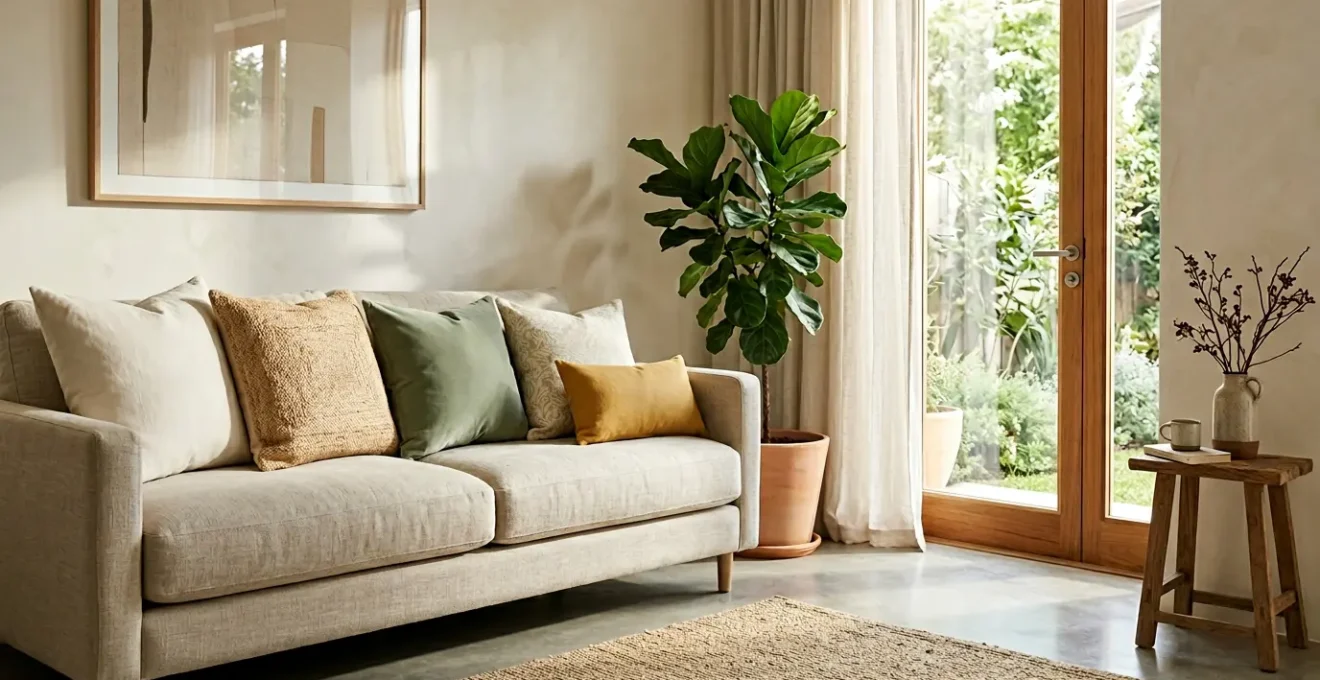
In summary:
- The “karate chop” look is only achievable with feather/down inserts, which are a worthwhile long-term investment.
- Successfully mix three patterns by combining a large-scale organic, a medium-scale geometric, and a small-scale texture, all unified by one common color.
- Avoid clutter by following the “5-Second Sit Test”: if a guest has to move pillows to sit, you have too many.
- Layer pillows on a sofa from largest at the back (24-inch) to smallest at the front (20-inch or lumbar) to create depth.
That sofa you’ve had for years? It’s not tired; it’s just waiting for a new story. For renters and budget-savvy decorators, the desire for a fresh, vibrant living space often crashes against the reality of fixed furniture and limited funds. We’re often told to just “add some pillows,” a piece of advice so common it has lost all its magic. We swap out colors, buy new covers, and yet the room still feels… flat. The spark of transformation remains elusive, leaving us with a collection of cushions rather than a curated look.
The common approach focuses on color and seasonal themes, which are important but are only the surface of the craft. We see magazine photos of perfectly plush, effortlessly chic sofas and wonder what secret we’re missing. We try to replicate it, but our arrangements look stiff, chaotic, or simply uninspired. The result is frustration and a feeling that true style is unattainable without a professional’s touch or a brand-new furniture budget.
But what if the secret wasn’t just about what you buy, but how you arrange it? The real magic of a high-impact refresh lies in understanding the “pillow physics” of inserts, the visual weight of patterns, and the silent storytelling of texture. This isn’t about just throwing cushions on a couch; it’s about cushion choreography. It’s a design science that, once mastered, empowers you to sculpt your space, breathe new life into old furniture, and achieve that coveted designer look for a fraction of the cost.
This guide will demystify the professional formulas. We will explore everything from the foundational choice of inserts to the artful layering of patterns and sizes. By the end, you’ll see your cushions not as simple accessories, but as powerful tools of transformation, ready to completely refresh your home.
Summary: Your Guide to a High-Impact Cushion Refresh
- Feather vs. Poly-fill: Why the “Karate Chop” Look Depends Entirely on the Insert?
- Scale and Geometry: How to Mix 3 Patterns Without Giving Yourself a Headache?
- The “Too Many Pillows” Mistake: When Does Comfort Become Clutter?
- How to Organize Cushion Covers So You Can Actually Find Them Next Season?
- 24-inch vs. 20-inch: In What Order Should You Layer Pillow Sizes on a Sofa?
- How to Break Up the “Mass” of a Giant Sofa With Throws and Pillows?
- The “Rule of 3” for Layering Bed Textiles to Look Like a Magazine
- Ergonomic Armchairs: Merging Back Support With Living Room Aesthetics
Feather vs. Poly-fill: Why the “Karate Chop” Look Depends Entirely on the Insert?
The soul of a luxurious pillow isn’t its cover; it’s what lies beneath. The quest for that perfectly plush, “karate-chopped” pillow seen in every design magazine ends here, and the answer is all about pillow physics. The ability of a pillow to hold that satisfying V-shape is a direct result of its fill material. Stiff, springy poly-fill inserts simply bounce back, refusing to be sculpted. They provide firm support but lack the malleable, weighty quality that signifies luxury.
For a truly transformative effect, feather and down inserts are non-negotiable. Typically a 95% feather and 5% down blend, these inserts have the weight and composition to be molded. When you chop them, the feathers displace and hold their new shape, creating those deep, inviting shadows that add dimension to your sofa. While the initial cost is higher, their longevity is far superior. Industry testing reveals that quality down-feather combinations maintain their shape and loft up to three times longer than synthetic alternatives, making them a smarter investment over time.
Furthermore, achieving a full, plump look requires a simple but crucial hack: always buy your insert 2 inches larger than your cover. A 20-inch cover needs a 22-inch insert. This ensures the cover is filled out completely to the corners, eliminating saggy, sad-looking edges and creating a taut, professional finish. Without this extra volume, even the best feather insert will look underwhelming.
This detailed table, based on an analysis of different insert materials, breaks down the key differences to help you choose the right foundation for your pillow arrangement. It highlights not just the aesthetic potential but also the practical considerations of cost and durability.
| Insert Type | Karate Chop Ability | Support Level | Lifetime (Years) | Cost Per Year | Allergen Risk |
|---|---|---|---|---|---|
| 95% Feather/5% Down | Excellent (deep, lasting) | Medium-soft, conforming | 10-20 | $2-4 | Medium |
| Poly-fill | Poor (won’t hold) | Firm, springy | 2-3 | $5-10 | Low |
| Down Alternative | Moderate | Medium-firm | 3-5 | $4-8 | Very Low |
| Memory Foam | None | Very firm | 5-7 | $3-6 | Low |
Scale and Geometry: How to Mix 3 Patterns Without Giving Yourself a Headache?
The fear of clashing patterns often sends us retreating to the safety of solid colors. But a masterful mix of patterns is what elevates a simple pillow arrangement into a work of art. The secret isn’t a mysterious design sense; it’s a simple, three-part formula based on scale, geometry, and color. By controlling these three variables, you can confidently mix florals, stripes, and textures without creating visual chaos.
The most effective method involves a hierarchy of patterns. You need one of each of the following:
- A large-scale “lead” pattern: This is your statement piece, often a floral, botanical, or large abstract print. It sets the tone and color palette.
- A medium-scale “secondary” pattern: This is typically a geometric print like stripes, chevrons, or plaids. Its structure provides a pleasant contrast to the organic flow of the lead pattern.
- A small-scale “support” pattern or texture: This can be a small dot, a subtle herringbone, or even a solid with a rich texture like velvet or boucle. It adds depth without competing for attention.
The unbreakable rule is that all three patterns must share at least one unifying color. This common thread ties the entire composition together, creating harmony instead of a headache.
This principle is perfectly demonstrated in a case study from the renowned Studio McGee’s proven three-tier pattern system. They flawlessly executed this by combining a large-scale floral ( chiếm 60% of the visual space), medium geometric stripes (30%), and small-scale dots (10%), all unified by a consistent navy blue thread that appeared in each pillow. The result is a dynamic yet cohesive look.
As you can see in the visual guide, the progression in scale is key. It allows the eye to travel from one pillow to the next without feeling overwhelmed. The largest pattern draws you in, the medium pattern offers a new point of interest, and the smallest pattern provides a restful finishing touch. This is the essence of successful cushion choreography.
The “Too Many Pillows” Mistake: When Does Comfort Become Clutter?
In the pursuit of a cozy, inviting sofa, there is a fine line between plush and preposterous. More is not always better, and piling on pillows without a plan can quickly cross the Comfort vs. Clutter Threshold. Instead of looking luxurious, an overstuffed sofa looks messy and, more importantly, becomes impractical. If you or your guests have to perform a “pillow sweep” just to find a place to sit, you’ve made the “too many pillows” mistake.
So, what is the magic number? While it varies slightly with sofa style, a reliable professional guideline suggests using 2-3 pillows for every 2.5 feet of sofa length. For a standard 84-inch (7-foot) sofa, this means an ideal range of 5 to 7 pillows. Any more, and you begin to sacrifice seating space for decoration. Any fewer, and the sofa can look sparse and uninviting.
Successful configurations typically featured 3-4 ‘Go Pillows’ (functional) and 1-2 ‘Show Pillows’ (decorative only), with Show Pillows placed at the sofa ends where they don’t impede seating.
– Emily Henderson’s Design Team, Style By Emily Henderson
This insight leads to a brilliant, practical rule of thumb: the “5-Second Sit Test.” Designer Emily Henderson’s team found that any arrangement that required more than 5 seconds of pillow-moving before someone could comfortably sit down had failed the test. This simple check is the ultimate arbiter of comfort versus clutter. It forces you to distinguish between pillows that are there for back support and daily use (“Go Pillows”) and those that are purely for aesthetic impact (“Show Pillows”). The key is to place the decorative-only “Show Pillows” at the far ends or in the center where they don’t interfere with the primary seating zones.
How to Organize Cushion Covers So You Can Actually Find Them Next Season?
A rotating collection of seasonal pillow covers is a decorator’s secret weapon. But this brilliant strategy can quickly descend into chaos: a messy linen closet filled with mismatched, wrinkled covers you forgot you even owned. An effective storage system is not just about tidiness; it’s about making your seasonal refresh a joyful, 15-minute task instead of a two-hour archeological dig.
The most transformative approach is the “Seasonal Look in a Bag” system. Instead of storing individual covers, you store complete, curated looks. This is a game-changer highlighted in a case study on Kris from Driven by Decor’s storage system. She groups all the covers for one specific seasonal arrangement (e.g., “Autumn: Plaid, Velvet & Rust”) into a single vacuum-sealed bag. Each bag is labeled with a photo of the finished look on her sofa. This brilliant method not only saves immense space but also eliminates decision fatigue and prevents the accidental re-purchase of similar patterns.
However, before you store anything, proper fabric care is essential to ensure your covers emerge from storage as fresh as they went in. Different materials require different treatments. Velvet must be brushed and spot-cleaned, while linen can often be machine-washed. Ensuring every cover is 100% dry is the most critical step to prevent mildew. Adding natural deterrents like cedar blocks or lavender sachets provides a final layer of protection.
Your Essential Pre-Storage Care Checklist
- Assess & Clean: Following fabric-specific instructions (e.g., hand-wash embroidery, brush velvet), clean every cover. Spot-clean stains immediately.
- Ensure Complete Dryness: Air-dry all covers thoroughly. For dense fabrics, double-check for any residual dampness, as this is the primary cause of mildew.
- Fold & Protect: Fold covers neatly or roll them to prevent hard creases. Place cedar blocks or lavender sachets within the storage container to repel pests and maintain freshness.
- Create “Look Kits”: Group covers for a complete seasonal look into a single, clear, vacuum-sealed bag or labeled box. This makes seasonal swaps effortless.
- Digital Inventory: Before sealing the bag or box, take a quick photo of the contents or the final arrangement. Label the container with the season (e.g., “Spring Florals”) for instant identification.
24-inch vs. 20-inch: In What Order Should You Layer Pillow Sizes on a Sofa?
Creating visual depth on a sofa is an art of layering, and size is your primary tool. Randomly placing pillows of different sizes can look accidental and flat. But a deliberate, structured approach to layering—working from largest to smallest—sculpts your sofa, giving it dimension and a professionally styled feel. The golden rule is simple: largest pillows go in the back, smallest ones in the front.
For a traditional, high-backed sofa, the classic formula begins with large 24×24 inch Euro pillows at the corners. These create a strong anchor and a tall backdrop. In front of them, you layer 20×20 inch pillows, which is the most common and versatile size. This is where you’ll typically feature your lead patterns. Finally, you can add a smaller accent pillow, like a 16-inch square or a rectangular lumbar, in the very front to complete the trio. This gradual decrease in size draws the eye inward and creates a sense of plush, sink-in comfort.
However, you don’t always have to be symmetrical. In fact, one of the most high-impact designer tricks is to play with asymmetrical balance. As interior designer Allisa Jacobs demonstrates, you can achieve balance through visual weight rather than perfect mirroring. She transformed a client’s sofa by placing a 24-inch and a 20-inch pillow on the left side, and balancing it with a single, extra-long lumbar pillow (e.g., 14×36 inches) on the right. Although the configurations were different, the perceived mass on each side was equal, creating a look that was both balanced and far more dynamic than a simple matching pair.
The type of sofa also dictates the layering strategy. A modern, low-backed sofa may be overwhelmed by 24-inch pillows; here, 20-inch or 22-inch pillows make a better starting point. Sectionals offer the perfect canvas for creating multiple, distinct groupings, while a small loveseat may only need two 20-inch pillows and a small central accent to look complete and uncluttered.
How to Break Up the “Mass” of a Giant Sofa With Throws and Pillows?
A large sectional sofa is a gift of comfort, but its sheer, uninterrupted mass can visually dominate a room, making it feel heavy and monolithic. The key to taming a giant sofa is not to cover it completely but to strategically break up its surface by creating “visual islands” of color and texture. This approach uses negative space—the empty parts of the sofa—just as deliberately as the pillows themselves.
Instead of lining up pillows from end to end, think of your sectional in terms of zones. A typical L-shaped sectional has three key zones: the corner, the long middle stretch, and the chaise end. Your goal is to create a distinct yet related pillow story in each zone, with breathing room in between.
A professional formula for this might look like:
- Zone 1 (The Corner): This is your anchor point. Create a dense, cozy cluster here with three pillows of graduating sizes (e.g., 24″, 22″, 20″). This grouping should feel lush and inviting.
- Zone 2 (The Middle): Exercise restraint here. To create that crucial negative space, use only a single, bold statement pillow—perhaps a unique shape like a round cushion or an extra-long lumbar. This “lonely” pillow prevents the arrangement from feeling like a continuous, boring line.
- Zone 3 (The Chaise End): Create another small cluster here, perhaps with two pillows. This grouping can mirror the colors of the corner zone or introduce a complementary palette to add interest.
The final touch is a casually draped throw blanket. Don’t fold it neatly over the back; instead, let it fall over one corner or across the chaise, further breaking up the sofa’s long lines and adding another layer of texture. This intentional use of space and accessories transforms the sectional from a single heavy block into a dynamic landscape of comfort.
The “Rule of 3” for Layering Bed Textiles to Look Like a Magazine
That perfectly effortless, “just-woke-up-like-this” bed in design magazines is anything but effortless. It’s a carefully constructed illusion built on the “Rule of 3” for textiles: a calculated layering of texture, sheen, and scale. This trifecta of contrast is what gives a bed its visual depth and luxurious appeal. By applying this simple rule, you can stop making your bed and start styling it.
The layering process is a form of textural storytelling. You begin with a foundational layer, add a contrasting middle layer, and finish with a statement top layer.
- Layer 1 – The Matte Base: Start with a primary covering that has a flat, non-reflective finish. A crisp linen duvet cover or a cotton waffle-weave blanket provides the perfect, understated canvas.
- Layer 2 – The Touch of Sheen: Introduce a material that catches the light. This could be a pair of silk or sateen pillowcases for your sleeping pillows or a folded sateen top sheet. This contrast between matte and shiny adds instant sophistication.
- Layer 3 – The Bold Scale or Texture: The final layer is your showpiece. Add a quilt with a large-scale pattern or, even better, an oversized, chunky cable-knit throw. This element provides the main textural interest and a feeling of abundant comfort.
The arrangement of these layers is just as important. Instead of pulling the duvet all the way up, fold it down by a third. Then, fold your quilt or coverlet up from the bottom to meet it, creating a wide, appealing band of color and texture across the middle of the bed. For the final “human touch,” drape the throw casually at a diagonal angle across one corner. This intentional imperfection is what makes the bed look inviting rather than rigidly staged.
The number and arrangement of pillows are the final step. The following table provides clear, designer-approved official pillow recipes for different bed sizes, taking the guesswork out of creating a perfectly balanced and proportional look.
| Bed Size | Sleeping Pillows | Euro Shams | Decorative Squares | Lumbar/Accent | Total Count |
|---|---|---|---|---|---|
| Twin | 1 standard | 1 Euro | 1 small (16″) | 0 | 3 |
| Full | 2 standard | 2 Euro | 1 medium (18″) | 0 | 5 |
| Queen | 2 standard | 2 Euro | 0 | 1 long lumbar | 5 |
| King | 2 King | 3 Euro | 2 small (16″) | 0 | 7 |
Key Takeaways
- Invest in the Insert: The feel and shape of your pillows are determined by the insert. Feather/down blends are superior for a luxe, malleable look.
- The Formula for Mixing Patterns: Combine one large organic, one medium geometric, and one small texture, all linked by a single common color.
- Balance Comfort and Aesthetics: Use the “5-Second Sit Test” to ensure your sofa is inviting, not an obstacle course. An ideal count is 5-7 pillows for a standard sofa.
Ergonomic Armchairs: Merging Back Support With Living Room Aesthetics
Our journey through the world of cushion choreography has focused on the grand stages of the sofa and bed, but the final act of a truly cohesive room lies in the details—specifically, the armchair. Often a lonely satellite, the armchair can be transformed from a simple seat into an integral part of your room’s design story. Here, the pillow serves a dual purpose: it is both a crucial bridge for visual cohesion and a functional tool for ergonomic comfort.
The secret to tying an armchair into your main sofa arrangement is the strategic use of a lumbar pillow. You don’t need to match patterns exactly. Instead, select a lumbar pillow for the chair that echoes an accent color from your sofa’s pillow collection. This creates a subtle but powerful visual link, making the entire seating area feel like a single, thoughtfully curated space. It’s a high-level design trick that whispers “intent” rather than shouting “matching set.”
Beyond aesthetics, the pillow on an armchair plays a vital role in back support. A chair that looks beautiful but feels uncomfortable is a design failure. The goal is to select a lumbar pillow that perfectly fills the gap between the natural curve of your lower back and the back of the chair. This requires a quick “fit assessment”: sit in the chair normally and have someone measure that gap. A pillow that is too thin offers no support, while one that is too thick will push you forward. The ideal pillow should be firm enough to compress no more than about 30% when you lean against it, providing support that is both gentle and effective.
By applying the principles of color and texture while also considering the practical needs of ergonomics, you complete the room’s transformation. The humble pillow proves itself once more as the most versatile tool in your decorating arsenal, capable of unifying a space, adding a pop of personality, and turning every seat into the best seat in the house.
Now that you are armed with the secrets of cushion choreography, the next step is to look at your own space with fresh eyes and begin the transformation. Start by assessing your current pillow inserts and build your new, curated look from there.