
A room can have beautiful furniture and perfect proportions, yet still feel incomplete. The missing ingredients are often the decorations and accessories that bring warmth, personality, and visual cohesion to a space. These elements work together like the supporting cast in a film: individually subtle, but collectively transformative.
From the rug underfoot that anchors your seating arrangement to the curtains filtering afternoon light, every accessory serves both a functional and aesthetic purpose. Understanding how these pieces interact allows you to create interiors that feel intentional rather than accidental, curated rather than cluttered.
This resource explores the major categories of home decorations and accessories, offering practical guidance on selection, placement, and styling. Whether you are starting from scratch or refreshing an existing space, these foundational principles will help you make confident decisions that reflect your personal style while solving common decorating challenges.
Open-plan living offers flexibility, but it can also create challenges around privacy, noise control, and visual clutter. Room dividers provide an elegant solution, allowing you to define separate zones without the commitment or expense of construction work.
Think of a divider as a movable wall that respects the flow of your space. Folding screens offer portability and come in materials ranging from wood to fabric to rattan. Open shelving units serve double duty, providing storage while maintaining visual connection between areas. Even a strategically placed curtain on a ceiling track can transform a studio apartment into a bedroom and living area.
When selecting a divider, consider three factors beyond aesthetics:
For those seeking a living element, some dividers incorporate vertical garden systems, adding greenery while defining space. The key is matching the divider’s function to your specific needs rather than choosing based on appearance alone.
Few accessories have the transformative power of a properly sized area rug. It anchors furniture, defines conversation areas, adds warmth underfoot, and introduces color or pattern into a neutral scheme. Yet rugs remain one of the most commonly misunderstood purchases in home decorating.
The most frequent mistake is buying a rug that is too small. A rug floating in the center of a room, with all furniture legs off its edges, creates what designers call the postage stamp effect: the space feels fragmented rather than unified. The solution lies in understanding the legs-on/legs-off principle.
In a living room, aim for a rug large enough that at least the front legs of your sofa and chairs rest on it. This visually connects the seating pieces into a cohesive grouping. For dining rooms, the rug should extend at least 60 centimeters beyond the table on all sides, allowing chairs to remain on the rug even when pulled out.
Material selection depends heavily on traffic patterns. Wool rugs offer excellent durability and natural stain resistance, making them ideal for living areas. Synthetic fibers like polypropylene work well in high-traffic hallways and are easier to clean. Natural fibers such as jute add texture but may not withstand heavy wear or moisture.
Do not overlook the importance of a quality rug pad. It prevents slipping, protects your floors from abrasion, and adds cushioning that extends the life of both the rug and the surface beneath it.
Curtains and drapes do far more than frame a window. They control how much light enters a room, provide varying degrees of privacy, and contribute significantly to thermal comfort. Understanding the different options helps you choose treatments that work as hard as they look.
For bedrooms or media rooms, blackout curtains block external light almost completely. Quality thermal blackout panels can also reduce heat loss through windows during colder months, potentially lowering energy costs. However, installation matters enormously: mounting the rod too close to the window frame allows light to leak over the top and through the sides. Extending the rod well beyond the frame and positioning it near ceiling height solves this problem.
When the goal is privacy without sacrificing daylight, linen curtains excel. Their natural weave diffuses sunlight, creating a soft, flattering glow throughout the room. Linen does have characteristics to consider: it wrinkles easily, creating a relaxed aesthetic that some love and others find untidy. It also shrinks, so purchasing extra length and allowing the fabric to puddle slightly at the floor accommodates this behavior while adding visual softness.
The hanging method affects how any curtain drapes. Rings or grommets allow fabric to fold into deep, even pleats. Rod pockets create a gathered look but restrict movement. Match the hardware to both your style preference and the curtain’s weight.
Walls represent the largest surface area in any room, making them powerful canvases for personal expression. The options extend far beyond paint, encompassing textured wallpapers, art collections, mirrors, and canvas prints.
Textured wallpaper offers advantages that paint cannot match. Heavy vinyl or embossed patterns can effectively mask minor wall imperfections: hairline cracks, uneven surfaces, and patches that show through flat paint. Beyond concealment, texture adds visual depth and can even improve a room’s acoustics by reducing echo.
When choosing patterns, understand the difference between straight match and drop match designs. Straight matches align horizontally at the same height on each strip, minimizing waste. Drop matches require offsetting each strip, using more paper but creating more dynamic patterns. For smaller rooms, consider whether to cover all walls or create a single accent wall, as bold patterns on every surface can feel overwhelming.
Hanging art and objects requires attention to placement. The museum height guideline suggests centering artwork at approximately 145 centimeters from the floor, placing it at natural eye level. Most people hang pieces too high, creating a disconnection between the art and the furniture below.
For collections, choose between grid arrangements, which suit uniform frames and modern aesthetics, and salon-style groupings, which allow varied sizes and create eclectic, personal displays. Do not underestimate the power of empty wall space: leaving areas bare provides visual rest and prevents rooms from feeling cluttered.
Strategically placed wall mirrors can make small rooms appear larger and dark corners brighter. Positioning a mirror to reflect a window effectively doubles the natural light entering the room. Frameless mirrors tend to recede into walls, enhancing the sense of space, while ornate frames become decorative statements in their own right.
For heavy mirrors, proper mounting is essential for safety. French cleats distribute weight across the wall and allow for easy repositioning, making them ideal for pieces weighing more than fifteen kilograms.
Soft furnishings offer the easiest and most affordable way to refresh a room’s look seasonally. Swapping heavy wool throws for lightweight cotton versions can shift both the visual and thermal character of a space, making it feel cooler in summer and cozier in winter.
Decorative cushions provide high impact for low investment. The secret to professional-looking arrangements lies in the inserts: feather-filled cushions hold the distinctive karate chop indentation that signals luxury, while polyester alternatives maintain a plumper, more casual shape. Mixing patterns successfully requires balancing scale: pair a large geometric with a medium floral and a small textural print, keeping colors within a cohesive palette.
When layering textiles on beds, the rule of three creates visual interest: combine a flat sheet, a coverlet or quilt, and a throw or blanket in complementary tones and textures. This approach achieves the layered look seen in design publications without overwhelming the bed with too many elements.
Plants bring life to interiors, but the vessels holding them contribute significantly to overall style. Choosing the right indoor planter involves balancing aesthetics with plant health considerations.
The pot-in-pot method, where a plant in its plastic nursery container sits inside a decorative cachepot, offers several advantages. It simplifies watering, protects floors from moisture, and allows you to swap plants seasonally without disturbing root systems. When repotting is necessary, follow the two-inch rule: move plants to containers only slightly larger than their current pot, as excessive soil volume retains moisture that can cause root rot.
Material matters for plant health. Terra cotta breathes, allowing soil to dry between waterings, making it ideal for succulents and cacti. Glazed ceramic retains moisture longer, suiting tropical plants that prefer consistent humidity.
Vases deserve consideration as sculptural objects, not merely flower holders. Empty vases grouped in odd numbers with varying heights create collected, intentional displays. When using them for flowers, shape determines function: narrow bud vases make single stems look elegant, while wide-mouthed vessels suit loose, abundant arrangements.
Placement affects visual energy. A vase positioned slightly off-center on a mantle or shelf creates dynamic tension that feels more interesting than perfectly centered symmetry. When styling bookshelves, balance the visual weight of heavy ceramic pieces with lighter elements like books or small objects.
Decorating a home is an ongoing process rather than a single project. By understanding how each category of decoration and accessory functions, you can make thoughtful additions over time that build toward a cohesive, personal space reflecting how you actually live.
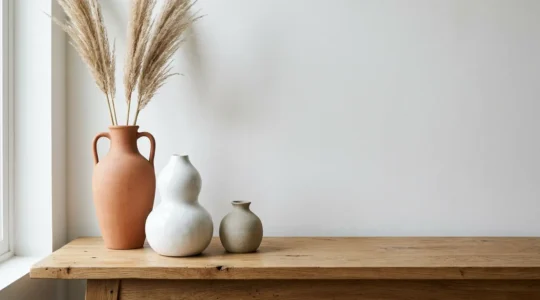
The true purpose of a vase is not to hold flowers, but to sculpt space with its form. A vase’s beauty lies in its shape and its interaction with the empty space around it, known as negative form. Styling an…
Read more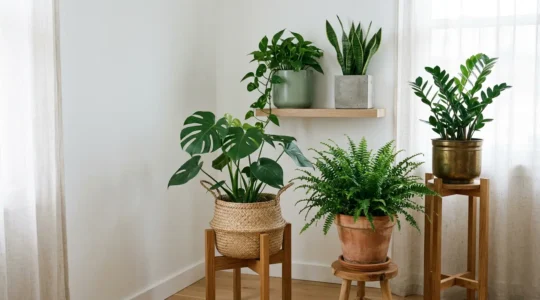
The secret to a thriving indoor jungle isn’t a green thumb; it’s mastering the science of the planter. Using a “pot-in-pot” system is far safer than direct planting, creating an air buffer that prevents root rot. Sizing up pots by…
Read more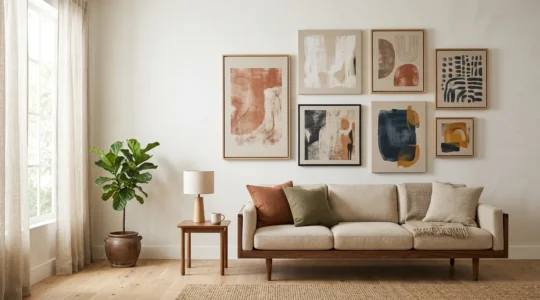
The secret to a gallery-worthy art collection isn’t a massive budget, but mastering the visual alchemy that elevates affordable prints into high-impact statements. Success lies in manipulating an artwork’s perceived value through strategic sizing, framing, and lighting, not in the…
Read more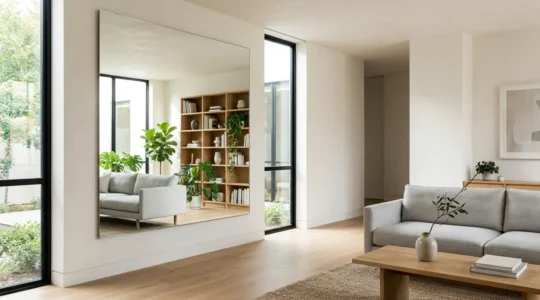
Hanging a mirror opposite a window isn’t always the master trick; the real magic for expanding a small space lies in the precise angle of reflection and, most importantly, *what* that mirror is aimed at. Light can be strategically channeled…
Read more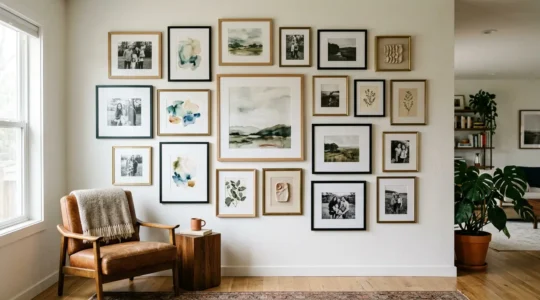
The secret to a captivating gallery wall isn’t following rigid rules, but mastering a few core principles of visual storytelling. Most home decorators hang art too high, breaking the visual connection with the room’s human scale and furniture. Negative space,…
Read more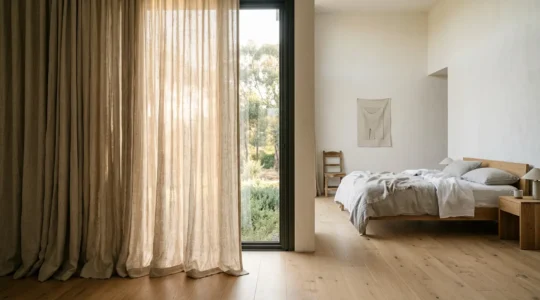
The secret to perfect linen curtains is to embrace their ‘flaws’—wrinkles, shrinkage, and sheerness—as intentional features of a sophisticated, lived-in aesthetic. Linen’s unique fiber structure creates a soft, flattering glow that synthetics can’t replicate. Strategic layering and understanding fabric weight…
Read more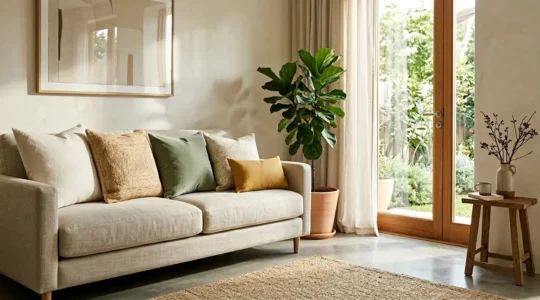
In summary: The “karate chop” look is only achievable with feather/down inserts, which are a worthwhile long-term investment. Successfully mix three patterns by combining a large-scale organic, a medium-scale geometric, and a small-scale texture, all unified by one common color….
Read more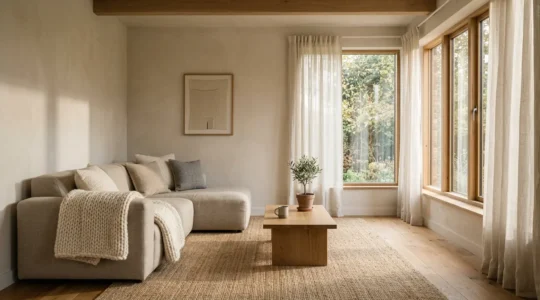
The key to a comfortable home isn’t just thermostats or decor; it’s mastering the sensory science of textiles. By strategically choosing and layering fabrics like wool, cotton, and linen, you can actively engineer your personal microclimate. This guide shows you…
Read more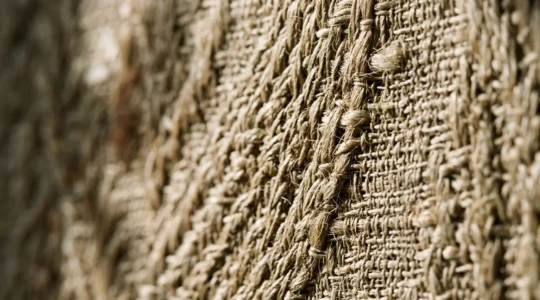
Contrary to the common belief that wallpaper merely covers flaws, it’s a strategic design tool that actively corrects them through optical and physical principles. Textured surfaces manipulate light by scattering it in multiple directions, making the linear shadows cast by…
Read more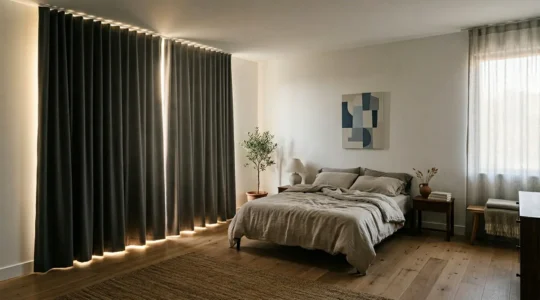
Achieving true 100% blackout is an engineering challenge, not a shopping one; the curtain itself is only one component of a complete light and thermal control system. Standard installations fail because they ignore the physics of light leakage at the…
Read more